Fashion AI inside the houses: what retailers, jewellers and luxury groups are doing
What LVMH, Hermès, Chanel, Zalando, H&M, Inditex, Ralph Lauren, Myntra, Flipkart and Pandora have launched and said about AI since 2024, and which claims come with numbers.
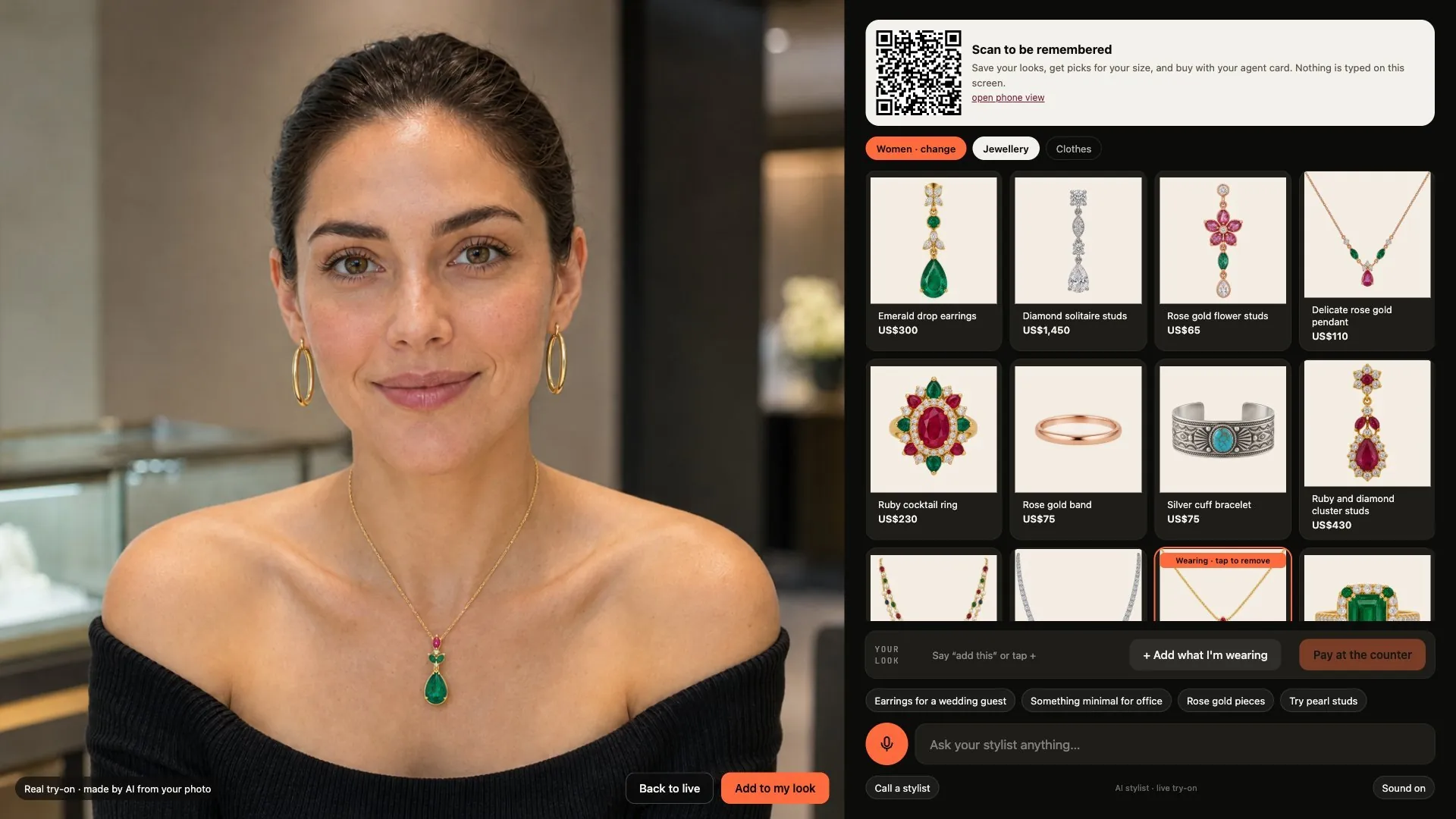
Fashion houses and retailers now talk about AI in every results call, but only a few publish what it did. Zalando is the clear exception: its FY2025 results say AI made 90% of its product content, its size and fit models avoid more than 8% of size-related returns, and its assistant reached six million users. Luxury houses such as LVMH, Hermès and Chanel describe AI as a support for sales advisors and operations, and are explicit that creation stays human. Mass-market brands from H&M to Zara use AI for imagery with consent and payment rules for models. Indian platforms report operating gains: faster onboarding, automated support and size recommendations at scale.
This is part four of our fashion AI research series and the third of five deep dives. It sets out what houses, jewellers and retailers have launched and said since 2024, which claims come with numbers, and what the pattern means for a brand deciding what to do next.
Which companies publish results, and which publish intentions?
The most useful way to read company AI news is to sort it by the kind of evidence behind it.
| Company | What it did | What it published | Evidence |
|---|---|---|---|
| Zalando | Assistant in 25 markets; AI content; size and fit models | 90% AI-made product content; more than 8% of size-related returns avoided; +13% add-to-bag from its own models; 6M assistant users | Company results release |
| Pandora | AI customer-service agent "Clara" | About 60% of service enquiries resolved; NPS up 10 | Executive figures reported by press |
| Myntra | Size and fit engine; support automation | Size recommendations for 85% of eligible users; 31% of support automated; seller onboarding from 15 days to 2 | Company figures reported by press |
| Flipkart | 250+ AI models; voice agents for sellers | About 90,000 seller calls a month by voice agents; 35 to 40% of code AI-written | Executive figures reported by press |
| H&M | AI "digital twins" of 30 models | Consent, watermarking, model control, standard pay | Announcement |
| Ralph Lauren | "Ask Ralph" stylist on Azure OpenAI | Launch only | Announcement |
| Mango | Mango Stylist in nine markets | Launch only | Announcement |
| Gap | Google Cloud partnership; checkout in Gemini | Launch only | Announcement |
| Walmart | Instant Checkout in ChatGPT | Launch only | Announcement |
| LVMH | "AI for ALL" programme across its maisons | Principles and use cases, no figures | Annual report and newsroom |
Zalando's FY2025 results release (12 March 2026) is the single richest public document on AI in fashion retail. Beyond the headline numbers, it says campaign creation fell from six weeks to days and content output rose 70%, that its size and fit models are built on more than a million customers' body measurements, and that its AI discovery feed has more than nine million weekly users. It also estimates that agentic commerce could reach up to 15% of online retail by 2030. These are the company's own measurements, not audited KPIs, but they are specific, and Zalando put them in a results release rather than a marketing post. Reuters reported that the shares rose as much as 13% that day.
The earlier milestone matters too. When Zalando expanded its assistant in March 2025, it said the pilot showed 40% more "high-value interactions" such as likes and add-to-cart, and that more than two million customers had used it. That is an engagement measure; the add-to-bag and returns figures a year later are closer to commerce.
What are luxury houses saying?
Luxury speaks about AI in a different register: principles first, numbers rarely.
LVMH. In November 2026 the group marked one year of "AI for ALL", listing use cases in anticipating a collection's potential, supporting sales teams, enriching client relationships and running operations, and saying AI "cannot replace" the group's human creativity and savoir-faire. Its 2025 annual report says AI must "enhance desirability and improve the customer experience". At NRF in January 2026, LVMH's chief omnichannel and data officer said technology should be "everywhere but be visible nowhere", described each of the 75 maisons running its own AI plan on shared foundations, and said it took two to three years to get from building basics to scaling business cases. A Louis Vuitton leader in the same session described agentic AI as an intelligent layer to "super-power our client advisors".
LVMH's own innovation prizes show where it sees practical value. The 2025 LVMH Innovation Award went to Kahoona with Dior for real-time segmentation of anonymous web visitors, and to OMI with Guerlain for a 3D and AI content studio producing visuals faster and at lower cost.
Hermès. Answering a shareholder at its April 2025 meeting, Hermès said it uses AI in IT, business intelligence, customer-service support and logistics, would form an AI governance committee in 2025, and that "creation will remain in the hands of our designers and artists".
Chanel. Speaking at Stanford in October 2024, CEO Leena Nair described asking ChatGPT to picture Chanel's leadership team and getting "a 100% male team", at a company where most staff are women. Her conclusion was not to avoid AI: luxury "has to engage with it", with ethics and integrity.
The common position is consistent: AI behind the scenes and beside the client advisor, not in the atelier and not as the face of the brand.
What are mass-market brands and platforms doing?
Imagery, with consent rules attached
H&M announced in March 2025 that it would create AI "digital twins" of 30 models, with watermarks, the models in control of their replicas and paid as for a shoot; the first campaign ran in July 2025. In December 2025 Reuters reported that Zara was using AI to edit images of real models, with Inditex saying it uses AI "only to complement our existing processes" and pays in line with industry practice.
The pushback is real. The UK actors' union Equity and the Model Alliance raised concerns about digital replicas and the crews they replace, as AP reported, and the UK Association of Photographers warned of fewer commissions. CNN's account of the Guess AI model in Vogue in 2025, and of Levi's 2023 test, shows how quickly AI imagery without clear terms draws a backlash; New York's Fashion Workers Act took effect in June 2025.
Stylists and assistants, mostly without results
Ralph Lauren launched Ask Ralph, a conversational stylist in its app built on Azure OpenAI, in September 2025. Mango launched Mango Stylist in nine markets in July 2025. Neither published usage or sales results. Kering's 2023 ChatGPT-based shopping experiment on its KNXT site went quiet. The pattern is that stylists are easy to launch and hard to prove.
Agentic channels
Walmart announced in October 2025 that shoppers could buy its products inside ChatGPT, with Doug McMillon saying search-bar shopping was "about to change". Gap signed a multiyear Google Cloud partnership in October 2025 and, per Digital Commerce 360, made products buyable in Google's AI Mode and Gemini in March 2026. Zalando went further: from 2027 its own agent will complete purchases for customers. That Q3 2026 report also carried the counterpoint, with JPMorgan flagging an ongoing structural risk from agentic commerce and the shares falling about 5%.
Operations first
Inditex's chief executive has named AI as a growth driver, and the company took a stake in Theker Robotics, which builds AI-enhanced robots for process automation. Gap's CTO put the marketing problem plainly: "The signal-to-noise ratio is worse than ever."
What are Indian retailers and jewellers saying?
Indian platforms report operating gains more than shopper gains. Inc42's AI blueprint for fashion ecommerce (2026) reports that Myntra shows size and fit recommendations to 85% of users with enough history, automates 31% of support queries and cut merchant onboarding from 15 days to two; that Nykaa attributes more than 55% of its FY26 technology impact to AI; and that Meesho's Hindi and English voice assistant Vaani reached more than 1.5 million users within a month. Myntra's CTO says it will not deploy AI "just because it exists". Flipkart's technology chief told Apparel Resources that it runs more than 250 AI models and is building an agentic commerce platform.
Reliance's 2025 AGM launched Reliance Intelligence with Google and Meta and promised AI "across all our businesses – from retail to telecom", without fashion specifics. For Indian jewellery, the public record is thin: Tanishq has offered website try-on for earrings and necklaces since 2020, but we could not find a 2024 to 2026 statement from Titan on AI with figures.
The clearest jewellery number came from Europe. Pandora's CTO told Glossy, as reported by PYMNTS, that its AI service agent resolves about 60% of customer-service enquiries and helped lift its NPS by 10, and that it was easier than training hundreds of extra agents for peak season.
What do the houses agree on, and where do they split?
Across the companies, five things recur:
- Content is where AI pays first. Zalando's 90%, Guerlain's studio, H&M's twins and Pandora's AI product descriptions all point to the same place.
- Fit and returns are the most defensible number. Zalando and Myntra publish here because it shows up directly in margin.
- AI sits beside people. LVMH's client advisors, Hermès's designers, Pandora's service team: the language is support, not replacement.
- Consent and pay are part of the launch. Watermarks, model control and standard fees are now how imagery programmes are announced.
- Agents are a channel to plan for. Walmart, Gap and Zalando each picked a position: sell through ChatGPT, sell through Gemini, or become the agent.
The splits are just as clear. Hermès treats AI in creation as off the table while Zalando celebrates AI-made content; that reflects different brand economics rather than a contradiction. Companies say AI complements creative teams; unions and photographers say it removes commissions, and nobody has published shoot volumes either way. And engagement is not revenue: no company in our research published an AI assistant's effect on conversion or sales as an audited figure.
What should a fashion or jewellery brand take from this?
- Start where the numbers are. Fit and returns, content cost and service resolution are the uses where peers publish results. A stylist or assistant is worth launching only with a measurement plan; see part nine.
- Put AI beside your advisors, especially in jewellery and luxury. A brand-safe assistant that knows the stock and hands the shopper to a person fits the luxury consensus. We describe what that looks like in a brand-safe AI stylist.
- Write the consent rules before the first AI image. Written consent, the usual fee, a visible label and rights you can prove. Part eight covers this in detail.
- Decide your agentic position. Sell through other people's agents, build your own, or both; either way, your product data has to be good enough for a machine to recommend.
- Publish your own results. In a field of launch announcements, a brand that can show what changed will be believed.
Ateliq follows the same lines that the houses have drawn: its twelve agents only draft, a person approves every trend board, concept, campaign and message, the photographer agent works from the brand's own photos without changing the piece, and every upload carries a rights statement. In the store, its stylist answers from the brand's stock and prices and hands the sale to staff. Those are design choices, and the houses' public positions suggest they are the right ones for premium brands.
Next in the series: what McKinsey, BCG, Bain, Deloitte and the analysts claim, and how good their numbers are.
Sources
- Zalando: FY2025 results release (12 March 2026)
- Zalando: More personal and smarter, the Zalando Assistant (27 March 2025)
- Reuters via MarketScreener: Zalando sees more opportunities than risks in AI (12 March 2026)
- The Next Web: Zalando tops sales forecasts as it sends AI agents shopping (3 November 2026)
- LVMH: AI for ALL (November 2026) and 2025 Interactive Annual Report
- Retail TouchPoints: AI in luxury, LVMH at NRF 2026 (12 January 2026)
- LVMH: 2025 LVMH Innovation Award (12 June 2025)
- FashionUnited: Hermès to form an AI governance committee (2 May 2025)
- Fortune: Chanel's Leena Nair on ChatGPT (30 October 2024)
- FashionUnited: H&M to create twins of models with AI (28 March 2025) and Apparel Resources on the first campaign (July 2025)
- AP via ABC7: H&M's AI clones, not everyone is happy (1 April 2025)
- Reuters via The Star: Zara turns to AI imagery (18 December 2025)
- CNN via Yahoo: Your favourite model might not be real (31 July 2025)
- FashionUnited ES: Inditex invests in Theker Robotics (15 July 2025)
- Microsoft: Ralph Lauren introduces Ask Ralph (9 September 2025)
- RetailIT Insights: Mango launches Mango Stylist (2 July 2025)
- Retail Dive: Walmart and OpenAI (14 October 2025)
- Retail Dive: Gap and Google Cloud (October 2025) and Digital Commerce 360: Gap's AI marketing overhaul (24 June 2026)
- Inc42: The AI blueprint for fashion ecommerce (2026)
- Apparel Resources: Flipkart accelerates AI strategy (4 July 2026)
- Storyboard18: Mukesh Ambani's 48th RIL AGM speech (29 August 2025)
- PYMNTS: Pandora embraces AI agents (22 December 2025)
Questions people ask
Which fashion retailer publishes the most AI results?
Zalando. Its FY2025 results say AI made 90% of its product content, campaigns take days instead of six weeks, its size and fit models avoid more than 8% of size-related returns, its own models lifted add-to-bag by 13%, and its assistant reached six million users. These are company-reported figures.
How do luxury houses talk about AI?
As support, not creation. LVMH says AI cannot replace human creativity and savoir-faire and describes it as a layer for client advisors; Hermès says creation will remain in the hands of its designers and formed an AI governance committee in 2025; Chanel's CEO says luxury has to engage with AI with ethics and integrity.
How are brands using AI models in campaigns?
With consent rules. H&M created AI digital twins of 30 models who control their replicas, are paid as for a shoot and whose images carry watermarks; Zara asked models for consent and paid a standard fee. Brands that skipped this, such as Guess in 2025, met a backlash.
What are Indian retailers doing with AI?
Reporting operating gains. Inc42 reports Myntra shows size recommendations to 85% of eligible users and automates 31% of support, Nykaa attributes over 55% of its FY26 tech impact to AI, and Meesho's voice assistant Vaani passed 1.5 million users in a month.
Has any jeweller published AI results?
Pandora's CTO told Glossy, as reported by PYMNTS, that its AI service agent resolves about 60% of customer-service enquiries and helped lift NPS by 10. We could not find a 2024 to 2026 AI statement with figures from Titan or Tanishq.