Trying on fine jewellery without opening the case
How jewellery counters can let shoppers try more pieces despite security, hygiene and advisor time, and where the real piece in the hand still decides the sale.
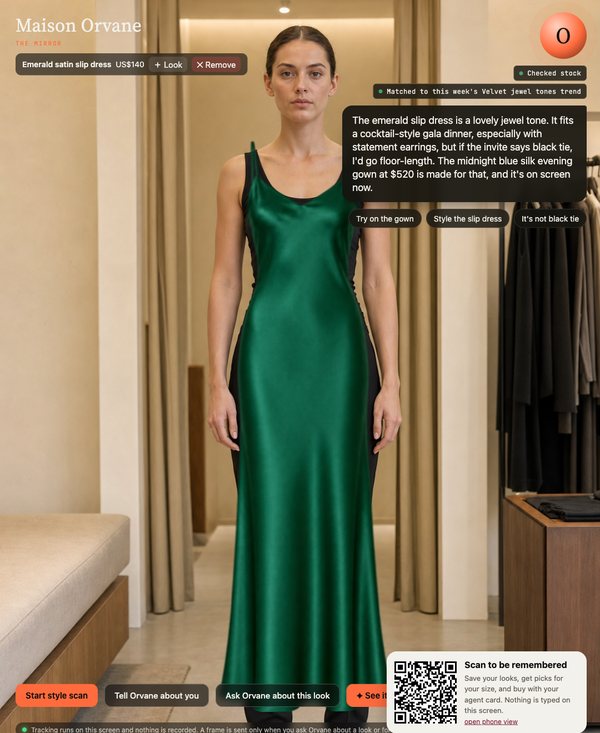
Fine jewellery counters can let shoppers try more pieces by splitting the job in two. A screen handles the breadth: the shopper sees many pieces on themselves without anything leaving the case. The advisor handles the depth: the two or three pieces that made the shortlist come out of the case, one at a time, to be held, weighed and worn.
Done this way, the screen saves advisor time and cuts the number of times a case is opened, without pretending that a picture of a diamond is the same as holding one. Below is what slows trying-on at the counter today, where on-screen try-on helps, and where the real piece still decides the sale.
Why is trying on fine jewellery so slow?
In a fashion store, a shopper can take five dresses into a fitting room. At a fine jewellery counter, every piece goes through a small ritual. The advisor opens the case, lifts the piece out, places it on a pad, helps with a clasp or a butterfly back, waits while the shopper looks, takes it back, checks it and locks it away. Four things set the pace.
Security
Loss-prevention advice in the trade is to limit what is out of the case at any moment. Guidance from Jewelers Mutual, published by the American Gem Society, tells staff to "never show more than one piece at a time", never to have more than two pieces out of the showcases at once, and to hold a customer's ID until the piece comes back.
The reasons are real. The Jewelers' Security Alliance recorded 1,420 crimes against US jewellery businesses in 2024, and grab-and-runs made up 65.1% of theft cases, averaging $9,713 per incident, according to Modern Jeweler. In 2025 the number of crimes fell to 1,233, but losses rose to $144.7 million, as JCK reported.
Those rules protect the stock. They also cap how many pieces a shopper can compare.
Time per piece
Each piece takes a few minutes of an advisor's full attention. On a Saturday afternoon in a London or New York flagship, a shopper who wants to compare ten pendants means ten trips in and out of the case, while other clients wait at the counter.
Hygiene
Pierced earrings are the hardest case. Many jewellers will not take pierced earrings back for hygiene reasons, and many shoppers would rather not put a sample through their ear. So earrings are often held up beside the ear instead of worn, which tells the shopper very little about how a drop actually hangs.
Advisor time
The scarcest thing on a busy floor is an experienced client advisor. Time spent on the eighth pair of studs for a browser is time not spent with the couple ready to choose an engagement ring. And bridal shoppers do a lot of looking: in The Knot's latest Real Weddings Study, proposers visited two retailers and looked at 10 rings in a physical location on average, and 64% bought in store, as Rapaport reported.
Where does on-screen try-on help at the counter?
On-screen try-on is good at breadth. It is most useful in these moments:
- Narrowing a long list. A shopper can see twenty pendants on themselves in the time it takes to bring out two, and arrive at the advisor with a shortlist.
- Earrings. On screen, an earring can be worn without touching the ear, which takes hygiene out of the browsing stage.
- Pieces that aren't on the counter. A piece held in the safe, in another store or made to order can still be seen on the shopper.
- Combinations. Hoops with a pendant, or a layered pair of chains, would otherwise mean several pieces out of the case at once.
- Hesitant shoppers. Some people don't like asking an advisor to open a case for something they are unsure about. A screen lets them explore first and ask later.
There is evidence that this kind of tool matters most when a shopper is uncertain. A Journal of Marketing study by Tan, Chandukala and Reddy, using data from a cosmetics retailer, found that augmented reality use was associated with higher sales for less popular brands, products with narrower appeal and more expensive products, and that the effect was stronger for customers new to the category. The authors conclude that it works best when product-related uncertainty is high. Fine jewellery fits that description well: high prices, and many shoppers buying in the category for the first time.
This is the stage Ateliq's counter screen is built for. A landscape screen at the jewellery counter shows earrings, necklaces and pendants up close. When a shopper wants to see a piece properly, Ateliq makes a photo from the brand's own product cut-outs, with earrings through the lobe and chains resting on the collarbones, in about half a minute and at true size when the brand supplies the millimetres.
Where does the real piece still matter?
Be honest, with yourself and with the shopper, about what a screen cannot show.
- Weight and feel. A solid gold cuff and a hollow one can look the same in a photo. Weight is part of what people are paying for.
- Light in movement. A diamond's sparkle comes from the stone moving under changing light. A photo captures one moment of it.
- Fit and comfort. Whether a clasp is easy to close, whether a chain sits at the right point on this neck, whether an earring will feel heavy by the end of an evening.
- Stone quality. Colour, clarity and cut are judged with a loupe, a grading report and an advisor's knowledge, not on a screen.
- The moment itself. For a significant purchase, holding the piece is part of the decision and part of the memory.
On-screen try-on should end with the real piece in the shopper's hand. If a screen is used to avoid the showcase entirely on a high-value sale, it is being used for the wrong job.
How should a counter combine the screen and the showcase?
The simplest model has four steps.
- Browse on screen. The shopper tries pieces freely, including earrings and pieces not on display, while the advisor finishes with another client.
- Shortlist. The shopper keeps the pieces they like. The advisor now knows what to bring out, instead of guessing from a description.
- Bring out the shortlist. The advisor opens the case for two or three pieces, still one at a time, and the conversation moves to weight, stones, fit and price.
- Decide, or take it home. If the shopper isn't ready, the look goes with them so the conversation can continue later.
Security rules don't change in this model. What changes is that the pieces coming out of the case are the ones most likely to sell. In Ateliq, a "Call a stylist" button on the screen brings someone from the floor team over, and a QR code sends the photo, the pieces and the prices to the shopper's phone.
What should a jeweller measure?
If you add try-on screens to a counter, watch a few numbers before and after, and against comparable stores without screens:
- Pieces tried on screen per shopper, against pieces brought out of the case.
- The share of sales where the shopper tried the piece on screen first.
- Earring sales, the category most held back by hygiene.
- Advisor time per sale, and how many clients wait at the counter at peak.
- Conversion and average transaction value at the counter.
What about privacy?
A camera at a jewellery counter has to earn trust. Brilliant Earth's annual report notes that virtual try-on features may collect biometric identifiers, and that states including Illinois, Texas and Washington regulate how biometric information is collected and used. Before installing anything, ask what is recorded, where it is processed, when a photo is taken and how long it is kept. In Ateliq, tracking runs on the screen and nothing is recorded; a photo is taken only when the shopper asks for one, and it is deleted after 30 minutes. Ateliq does not use facial recognition.
The screen widens what a shopper can consider. The advisor, and the piece in the hand, still close the sale.
Sources
- American Gem Society / Jewelers Mutual: Grab-and-run jewelry thefts, what to watch for and how to prevent them
- Modern Jeweler: US jewelry crime losses rose to $142.5M in 2024 (JSA)
- JCK: JSA report on 2025 jewelry crimes
- Rapaport: Lab-grown "taking over" engagement-ring spending (The Knot)
- Kellogg School of Management: Augmented reality in retail and its impact on sales (Journal of Marketing)
- Brilliant Earth Group: Form 10-K for 2025
Questions people ask
Why can't shoppers try on many fine jewellery pieces at once?
Security guidance in the trade is to show one piece at a time and keep no more than two out of the showcase, because grab-and-run thefts are the most common theft against jewellers. Each piece also takes advisor time, and pierced earrings raise hygiene concerns.
Can virtual try-on replace trying on the real piece of jewellery?
No. On-screen try-on is good for narrowing a long list, trying earrings hygienically and seeing pieces not on the counter. Weight, how a stone moves in light, fit and stone quality still need the real piece in the hand.
How should a jewellery counter combine a try-on screen with the showcase?
Let the shopper browse and shortlist on screen, then have the advisor bring out the two or three shortlisted pieces one at a time. If the shopper isn't ready to buy, send the look to their phone so the conversation can continue.