12 ways fashion and jewellery stores use AI on the shop floor in 2026
Twelve ways fashion and jewellery stores use AI on the shop floor in 2026, from try-on and stylists to clienteling, translation, unmet demand and follow-up.
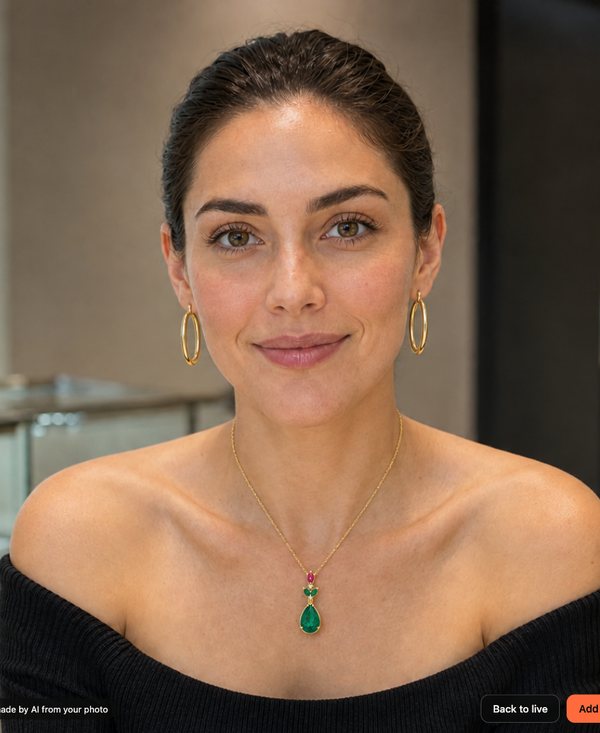
In 2026, fashion and jewellery stores use AI on the shop floor in three broad ways: to help shoppers try and choose (try-on screens, stylists that answer from live stock), to help staff serve better (appointment preparation, clienteling, translation, quick answers), and to help the business learn from every visit (traffic and conversion, unmet demand, trends and follow-up). The best uses keep client advisors at the centre and make the store better at something it already does.
Here are twelve, with a concrete example of each.
1. Trying jewellery on without opening the case
At a fine jewellery counter, every piece that comes out of the showcase takes advisor time and adds security risk. Try-on screens let a shopper see many pieces on themselves first, so the case opens only for the shortlist.
Example: a shopper in a Paris boutique tries fifteen pairs of drop earrings on screen, then asks to hold the two she liked most. Ateliq's counter screen does this for earrings, necklaces and pendants, and makes a photo of the shopper wearing the exact catalogue pieces in about half a minute. Research supports the idea: a Journal of Marketing study by Tan, Chandukala and Reddy found augmented reality's sales effect was strongest for more expensive products and for customers new to a category.
2. Showing full looks on a full-length screen
Fitting rooms are where fashion stores lose time and shoppers: queues at peak, and shoppers who won't undress to try one more thing. A full-length screen near the rails lets a shopper see a dress or a coat on themselves as they turn, and decide which pieces are worth taking into the fitting room.
Example: in a Milan store on a Saturday, a shopper sees three coats on screen while the fitting rooms are full, then tries on only the one she wants in her size.
3. Answering "does this work?" from live stock
Brands have started putting conversational stylists in front of shoppers. Ralph Lauren launched Ask Ralph in its US app in September 2025, built with Microsoft on Azure OpenAI, offering outfit suggestions from Polo Ralph Lauren's current stock (FashionUnited). Mango launched Mango Stylist in July 2025 for its womenswear line on its website and Instagram in nine markets, including the UK, France, Italy and the US (Retail Gazette).
On the shop floor, the same idea has to work out loud and in seconds. Example: a shopper in a London store asks whether a slip dress works for a black-tie dinner; the stylist suggests a floor-length gown in stock in that store instead, and says why. Ateliq's stylist speaks in the brand's own name, follows the brand's rules and only suggests what the store stocks.
4. Preparing appointments with a curated selection
For bridal and high-value appointments, AI can turn what a client has saved and said into a brief and a prepared tray.
Example: Brilliant Earth's showrooms are appointment-driven, and its annual report says it uses customer data to curate inventory for in-person appointments, so visitors see a personalised and relevant selection. Preparation matters: in The Knot's latest Real Weddings Study, proposers visited two retailers and looked at 10 rings in person on average, and 64% bought in store (Rapaport).
5. Selling beyond what the store holds
A store can only display so much. Product discovery tools, increasingly powered by AI, help advisors show pieces held elsewhere: in another store, a warehouse or a supplier's stock.
Example: Signet Jewelers reports in its 2026 annual report that "virtual inventory", supplier stock displayed for sale without Signet holding it, made up about 51% of its North America e-commerce sales and 11% of total segment sales in fiscal 2026. In store, the same catalogue lets an advisor in New York show a client a piece that isn't in the case and have it brought in.
6. Giving client advisors a clienteling assistant
Clienteling has always relied on an advisor's memory and a client book. AI can suggest who to contact, when, and with what: a new arrival in a client's size, an anniversary coming up, a piece they nearly bought.
Example: Signet's annual report describes digital and data capabilities that give real-time insight into customer journeys and enable personalised communications, with AI and personalisation shaping its marketing. In practice, an advisor starts the day with five suggested messages and edits each one before sending, so the voice stays theirs.
7. Answering staff questions on process and product
New and seasonal staff ask the same questions: how to process an exchange, how to take a deposit, what the warranty covers. An assistant on a handheld can answer from the company's own procedures.
Example: Target piloted Store Companion, a generative AI app for store associates, at about 400 stores before planning to roll it out to nearly 2,000 (Retail Dive). It is a mass retailer, but the same need exists in a luxury store: a new advisor in Dubai checking the resizing policy before promising a client a date.
8. Translating for international clients
Luxury flagships in London, Paris, Milan and Dubai serve clients in many languages. Real-time translation lets an advisor hold a proper conversation when no colleague speaks the client's language.
Example: Lotte Department Store introduced an AI translation service at its Jamsil store in Seoul in April 2024, offering real-time interpretation in 13 languages at information desks that handle more than 700 inquiries from foreign customers a day (KED Global).
9. Counting traffic and reading conversion
Sales without traffic tell only half the story. People-counting sensors give each store a conversion rate: transactions divided by visitors, hour by hour. That shows whether a slow day was a traffic problem or a selling problem, and helps match staffing to peaks.
Example: Sensormatic Solutions, which measures store traffic for retailers, reported that US in-store traffic on Black Friday 2025 was down 2.1% on 2024 (Sensormatic). With fewer visitors, converting each one matters more.
10. Recording what shoppers asked for and couldn't find
A till records what sold. It never records the shopper who asked for a cobalt blue dress in a size 12, or a pendant under $500, and left. When shoppers ask a stylist out loud, those requests can be logged.
Example: a merchandiser sees the same request, emerald studs, coming up week after week in stores that don't stock them, and adds them to the next buy. The cost of missing demand is large: IHL Group's 2025 research puts out-of-stock losses at $1.157 trillion a year across retail, when customers leave empty-handed (Board).
11. Turning in-store signals into trends and design briefs
What shoppers try, ask for and can't find is a direct reading of local demand. AI can combine it with fashion press and social coverage into a trend view for each city, and turn repeated gaps into briefs for design.
Example: Ateliq drafts a weekly trend board for each city, which shoppers see only after the brand approves it, and drafts design concepts in the brand's style from gaps in demand (a colour, a cut, an occasion, a price). The concepts can be tried on the mirror before anything is sampled. Executives in the BoF and McKinsey State of Fashion 2026 report named AI the industry's biggest opportunity, and jewellery is forecast to be the fastest-growing fashion category by unit sales over the next few years (FashionUnited).
12. Following up after the visit, with consent
Most shoppers leave without buying. The ones who were close are the most valuable people a store will meet that day. AI can send the look they tried to their phone, and tell them when a piece is back in their size, as long as they have agreed to hear from the brand.
Example: a shopper scans a QR code and leaves with a photo of herself in the earrings, the pieces and the prices. Two weeks later, when the size she wanted in a matching necklace is back, she gets one message about it, and buys online or comes back to the store.
What should a brand get right before starting?
- Consent and privacy. Decide what the camera records, where it is processed and how long anything is kept. Brilliant Earth's annual report notes that virtual try-on features may collect biometric identifiers, which some US states regulate.
- Staff first. Each of these works best when advisors see it as help, and when sales started on a screen still count for the person who closes them.
- Measurement. Compare pilot stores against matched control stores on conversion, ATV and UPT, not on usage alone.
- Brand control. Anything that speaks to shoppers should follow the brand's rules, voice and stock.
The stores getting the most from AI in 2026 are not the ones with the most screens. They are the ones using it to give client advisors more time with clients, and to learn from every visit.
Sources
- Kellogg School of Management: Augmented reality in retail and its impact on sales (Journal of Marketing)
- FashionUnited: Ask Ralph, Ralph Lauren launches AI-powered digital stylist with Microsoft
- Retail Gazette: Mango launches AI stylist tool
- Brilliant Earth Group: Form 10-K for 2025
- Rapaport: Lab-grown "taking over" engagement-ring spending (The Knot)
- Signet Jewelers: Form 10-K for fiscal 2026
- Retail Dive: Target to launch generative AI employee app Store Companion
- KED Global: Lotte Department Store introduces AI translation service
- Sensormatic Solutions: Black Friday 2025 recap
- Board: The $1.73 trillion wake-up call (IHL Group 2025 study)
- FashionUnited: The State of Fashion 2026 (BoF and McKinsey)
Questions people ask
How are jewellery stores using AI in 2026?
Common uses include try-on screens at the counter so fewer pieces leave the case, preparing appointments with a curated selection, clienteling suggestions for advisors, and following up with shoppers who agreed to hear from the brand.
Does AI on the shop floor replace sales staff?
The most effective uses support client advisors rather than replace them: preparing appointments, answering process questions, translating and handling follow-up, so advisors spend more time with clients.
How can a store capture demand it doesn't stock?
When shoppers ask a stylist or screen for something out loud, requests the store can't answer from stock can be logged by theme, such as a colour, cut, occasion or price. That shows merchandisers and designers what is missing from the range.