Clienteling in 2026: what it means for premium fashion and jewellery brands
What clienteling means now: client advisors, consented memory of sizes and occasions, store-to-phone follow-up, and how in-store AI and advisor apps fit together.
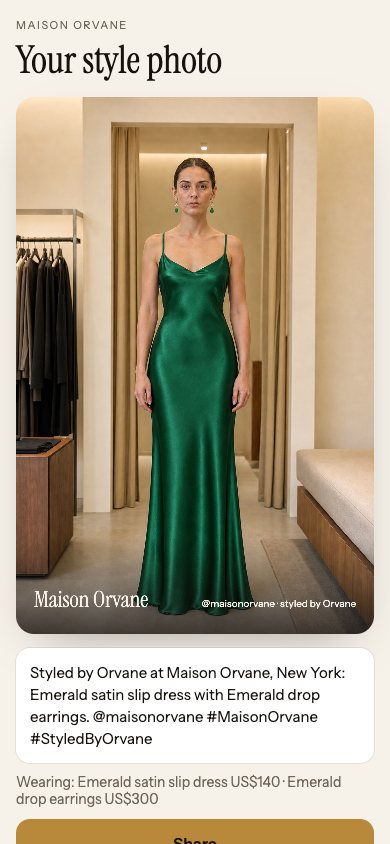
Clienteling in 2026 means knowing each client well enough to serve them personally, in the store and after they leave, with their permission. For premium fashion and jewellery brands it rests on three things: a client advisor who owns the relationship, a consented record of the client's sizes, preferences and occasions that every channel can read, and follow-up that reaches the client's phone with something they actually want.
The idea is old. The private client book kept by an advisor on Bond Street or Fifth Avenue predates any software. What has changed is how many clients can be served this way, how much of a visit can be remembered, and how carefully that memory has to be handled.
What does clienteling mean now?
For years, clienteling meant the very top of the pyramid: a few hundred clients per boutique, each known personally by one advisor, reached by a call or a message when the right piece arrived. That still matters. In their 2025 study, BCG and Altagamma describe top-tier clients as less than 1% of the market but 23% of its value.
The same study found that 70% of potential top-tier clients are missed by brands, because they fall outside fixed definitions or spending thresholds. In other words, the client book is incomplete precisely where it matters. And the industry is now trying to widen the circle. The 2026 edition of the BCG-Altagamma study expects one-time buyers to fall from about 60% to about 40% of a luxury brand's customer base "as the sector invests in Clienteling".
That is the real shift. Clienteling is moving from a VIC programme run by a few star advisors to a way of running every store: every visit is a chance to learn something the client is happy for you to remember.
Why is it harder than it sounds?
Two reasons: the data is scattered, and clients are wary of being sold to.
On the first, Salesforce's Connected Shoppers research reports that only 17% of store associates have access to a unified view of customer data. An advisor in Milan may know a client's ring size from memory, while the e-commerce team knows her last three online orders and nobody knows what she tried on in Paris last month.
On the second, clients want attention without pressure. Coverage of the McKinsey and BoF report Face to Face With Luxury Clients notes that US clients are put off by pushy sales tactics and transactional environments. Chanel's Bruno Pavlovsky is quoted there saying clients "want to look around and discover; they also want privacy and discretion."
Good clienteling has to hold both truths: remember more, intrude less.
What should a client profile hold?
A useful profile is short, specific and something the client would recognise as accurate if they read it. For fashion and jewellery, that usually means:
- Sizes and fit notes. Dress and shoe sizes, ring size, preferred chain lengths, and fit remarks such as "prefers a longer sleeve".
- Occasions coming up. A wedding in Lake Como in June, a gala in New York, an anniversary. Occasions give follow-up a reason to exist.
- What they love, and what they nearly bought. Pieces tried and put back are often more telling than purchases. A client who tried the emerald drops twice is waiting for a reason.
- How they like to be contacted. Channel, language, time of day, and whether they want messages at all.
- Who serves them. The advisor they know, so a message comes from a person rather than a department.
Just as important is what a profile should not hold: anything the client did not knowingly share, and anything inferred about sensitive characteristics. A profile built from what a camera guessed is not clienteling. It is surveillance with a CRM attached, and it does not survive a client asking to see it.
What does consent look like in practice?
Consent works best when it is offered at a moment of value. A client who has just made a look they like is far more willing to say "remember my size" than one asked to fill in a form at the till. Three practices make it hold up:
- Separate the asks. Being remembered in store and receiving messages are different permissions. Ask for each plainly.
- Show the record. Clients should be able to see, change or delete what is kept about them, ideally from their own phone.
- Keep it proportionate. Hold what helps you serve them and drop what does not. Old notes about a size two seasons ago are a liability, not an asset.
Our guide to privacy by design for in-store AI covers the legal side in more detail.
How do in-store AI and advisor apps fit together?
They do different jobs, and the best set-ups let each do its own.
Advisor apps are where the relationship lives: client profiles, wish lists, one-to-one messages, appointments and the record of which advisor drove which sale. They work well when an advisor is with a client, or knows one well enough to reach out.
In-store AI covers the moments an advisor cannot. The shopper browsing alone on a Saturday afternoon. The fifth pair of earrings someone wants to see on themselves. The question at closing time about whether a dress works for a black-tie dinner. A screen with try-on and a stylist can serve those moments, and, for shoppers who opt in, capture what was tried and asked about, which is exactly the information an advisor's notebook never had.
The joins between the two matter most:
- Hand-over in the store. When a shopper wants a person, the screen should bring one over, not send them to find one.
- Memory across visits. What a shopper chose to save on the screen should be available next time, to the screen and to the person serving them.
- One voice afterwards. Follow-up should not come from three systems at once. Decide which one owns the message.
What does good store-to-phone follow-up look like?
The best follow-up starts with something the client chose to take home: a photo of the look, the pieces and their prices. From there, a few rules separate service from spam.
- One relevant message beats a campaign. "The coat you tried is back in your size at our London store" is useful. A weekly newsletter is not clienteling.
- Tie it to the occasion. A message three weeks before the wedding they mentioned lands; one the day after their visit can feel like pursuit.
- Keep a human name on the most personal messages. BCG's 2026 summary found that consumers accept AI in after-sales support and experiential clienteling, but that personalised clienteling messages from a client advisor are an area where pockets of resistance emerge, concentrated among Western boomer consumers. Its advice is that the lever is trust: showing that AI enhances rather than replaces the human relationship. A sensible pattern is for AI to draft and the advisor to review and send.
- Make stopping easy. Every message should make it obvious how to change preferences or opt out.
How should you measure clienteling?
Sales attributed to advisors are the obvious measure, but they reward the clients you already knew. A fuller set looks at the base as a whole:
- The share of visitors who choose to be remembered, by store.
- The share of one-time buyers who return within a season.
- Time from visit to first useful follow-up.
- Reply and opt-out rates, read together.
- Requests that went unanswered because the piece, size or price did not exist, which belong with the buying and design teams.
What does good look like?
A shopper in Dubai tries three pairs of earrings at the counter on Saturday, asks whether the longest pair suits an evening wedding, saves the look to her phone and agrees to be remembered. On her next visit she is greeted by name and shown picks in her size. When the pair she nearly bought comes back in stock, she hears about it once, from someone she knows. Nothing about her was guessed, and she can see everything that was kept.
Where does Ateliq fit?
Ateliq is the in-store side of that picture. A full-length mirror and a counter screen let shoppers try pieces on, ask a stylist that speaks in the brand's own name, and take the look to their phone. Shoppers who opt in get a style profile with their size, their occasions, what they love and what they nearly bought, and the stylist remembers them next visit. "Call a stylist" brings someone from the floor team over, and when a piece someone tried is back in their size, Ateliq can tell them. It is new, and we are taking design-partner pre-orders from a small group of brands.
Sources
Questions people ask
What is clienteling in 2026?
Clienteling is knowing each client well enough to serve them personally, in store and after they leave, with their permission. It now rests on a client advisor, a consented profile of sizes, preferences and occasions, and useful follow-up on the client's phone.
What should a clienteling profile hold?
Sizes and fit notes, upcoming occasions, what the client loves and nearly bought, how they like to be contacted and which advisor serves them. It should not hold anything the client did not knowingly share, or anything inferred about sensitive characteristics.
How do in-store AI and clienteling apps work together?
Advisor apps hold the relationship: profiles, messages, appointments and attribution. In-store AI covers moments advisors cannot, such as shoppers browsing alone, and for shoppers who opt in it records what they tried and asked about. Agree on one client profile and one owner for follow-up messages.