Local demand vs global trend reports: forecasting fashion trends city by city
Trend agencies, social listening, search and sell-through show what is rising. How to test that view each week against what shoppers in each city ask for and try.
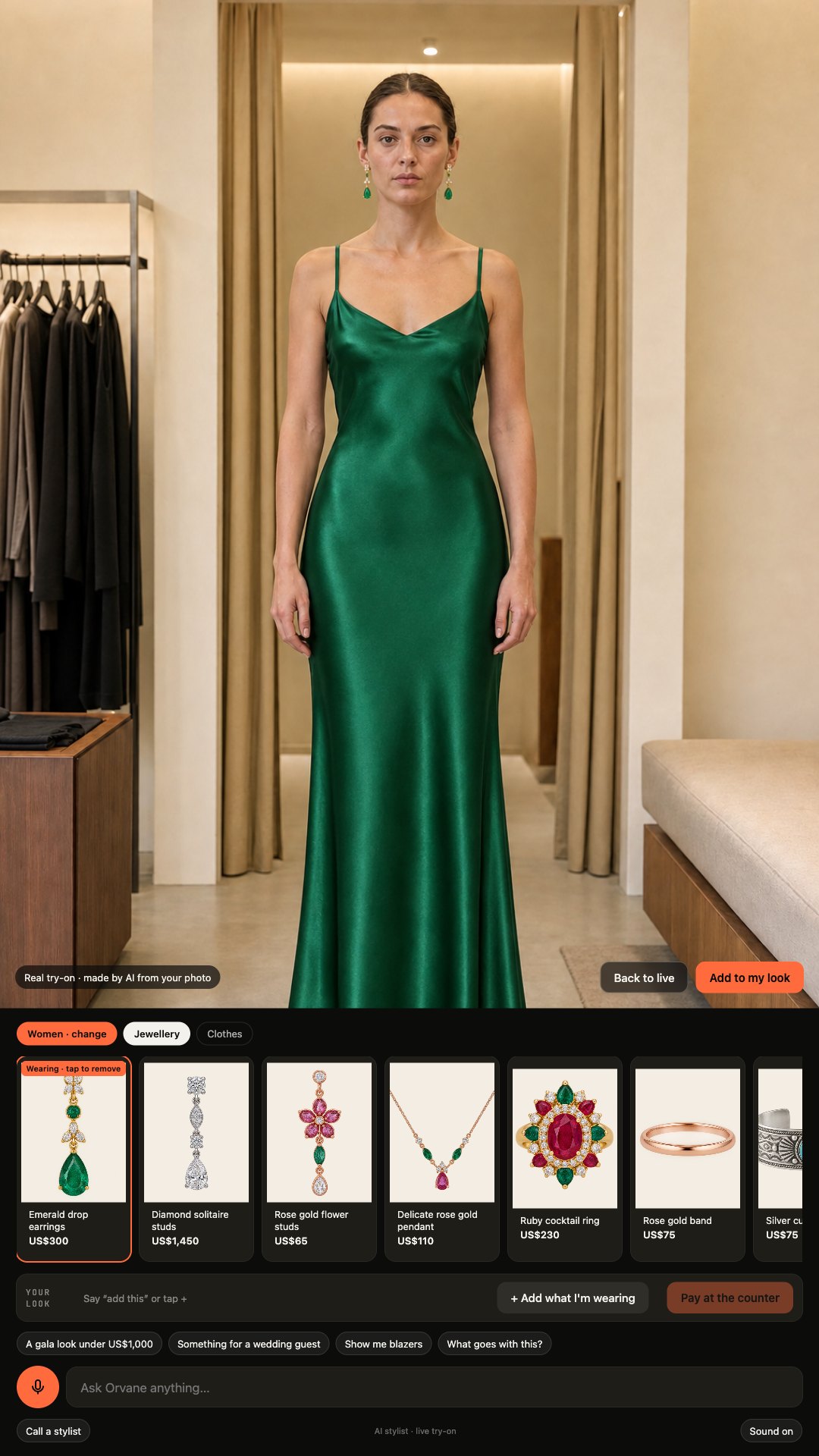
Global trend reports tell a brand what is rising across the market. They cannot tell it what shoppers in its own Paris or Dubai store are asking for this week, and the two often differ because of climate, occasions, price and taste. The most reliable approach is to treat the global view as a hypothesis and test it every week against local signals: city-level search, what shoppers try on in your stores, and what they ask for and can't find.
How do fashion and jewellery brands forecast trends today?
Most premium brands combine four kinds of input. Each sees something the others miss.
Trend agencies
Agencies such as WGSN combine large data sets with analysts. WGSN describes five streams of data: more than five million tagged catwalk, trade-show and street-style images; social posts; more than 300 million retail SKUs tracked daily; search data; and consumer surveys. Its forecasts are checked by more than 250 experts, with an analyst in the loop. The strength is breadth and lead time. The limit is that the view is built for the whole market, not for your customers.
Image-based social listening
Firms such as Heuritech analyse social images rather than text. Heuritech groups accounts into panels, from edgy early adopters to the mainstream, recognises more than 2,000 garment details such as shapes, fabrics, prints and colours, and builds panels for specific geographies. This shows how a detail moves from early adopters toward the mainstream, but it measures what people post, which is not always what they buy.
Search data
Search shows intent, and it can be cut by place. Google Trends shows where a term is relatively more popular, with regions and some cities ranked, although metro-level data is only available for some countries and every figure is relative rather than an absolute volume. Researchers have used Google Trends to forecast interest in fashion brands; a 2019 study using Burberry as a case found that cleaning the noise out of the series first gave the best forecasts.
Your own sell-through
Sales by store and style are the ground truth, but they arrive late and only describe what you stocked. A trend you never ranged cannot show up in your own sell-through.
| Source | What it shows | Granularity | Blind spot |
|---|---|---|---|
| Trend agency | What is rising across the market | Global, sometimes regional | Your customers and your range |
| Social image analysis | Details spreading from early adopters | Country or region | Posting is not buying |
| Search data | What people are looking for | Country, region, some cities | Relative, not volume; no context |
| Sell-through | What sold, where and at what price | Store and size | Late; blind to what you didn't stock |
| In-store questions and try-ons | What local shoppers want now | Store and week | Only shoppers who use the screen |
Why does demand differ from city to city?
A trend board that is right for the market can still be wrong for a store. Five things drive the gap.
- Climate. A Federal Reserve Bank of San Francisco study of more than 100 stores of a US apparel and sporting goods brand found that what counts as good or bad weather depends on location, Miami versus Boston for example, and that a very bad weather day cost on average about 40% of a day's sales. Stores with more experience of severe weather were hit far less. Coats, sleeve lengths and fabrics follow the local season, not the global one.
- Occasions. Wedding seasons, religious holidays, gala calendars and the office dress code differ between London, Dubai and Tokyo. "What to wear to a summer wedding" peaks at different times in different cities.
- Price and the shopper mix. A flagship that sees many tourists has a different price tolerance from a neighbourhood store a few miles away.
- Taste and modesty. Hemlines, necklines, metal colour and stone size travel differently between markets.
- Sizes. The size curve that works in Milan may not work in New York.
Even among the wealthiest shoppers, priorities vary by market. In The State of Fashion 2026, McKinsey and The Business of Fashion found notable regional differences among high-net-worth shoppers in China, the UK and the US in what would encourage them to buy more from luxury brands.
What do global trend reports miss?
Global forecasts are good at direction and early warning. They are weaker on three things a head of merchandising needs:
- Relevance to your brand. A rising trend may not suit your customer, price point or codes.
- Timing by city. A detail can be mainstream in one city and a season away in another.
- Your gaps. No external report knows that shoppers in your Paris store keep asking for a longer version of your best-selling skirt.
How do you combine a weekly trend view with local demand?
The aim is not to replace the global view but to filter it. A simple weekly process:
- Start with the global view. Take the trends your agency, social and press reading say are rising.
- Filter for the brand. Drop what doesn't fit your customer, price or style.
- Check each city. For every remaining trend, look at local search, what shoppers tried in that city's stores and what they asked for.
- Place each trend in a grid (below) and decide.
- Approve and publish a short board for each city, so staff and the stylist on the screen talk about the same things.
- Check the result the following weeks: did featured pieces get tried more and sell at full price?
| Shoppers in this city ask for it | Shoppers in this city don't | |
|---|---|---|
| Rising globally | Act now: feature, allocate, re-order | Watch: small test, revisit in a few weeks |
| Not on global reports | Local opportunity: feature and brief buying | Ignore |
The bottom-left box is the one global reports can never fill. It holds the requests that only your stores hear, and it is often where the best local sell-through comes from.
How should you read in-store signals as trend evidence?
Questions and try-ons are noisy on their own. A few rules keep them honest:
- Count shoppers, not mentions. One enthusiastic client asking three times about a colour is one data point.
- Look for repetition. A request that appears in several stores in the same city, for two or three weeks running, is a signal. One busy Saturday is not.
- Translate words into attributes. "A coat like this but in camel, and less boxy" and "a softer camel coat with a narrower cut" are both asking for a colour and a silhouette. Tag them the same way so they can be counted together.
- Separate interest from conversion. A trend piece that is tried often but rarely bought may be right for the board and wrong for the buy, or right at a lower price.
- Compare against the season. Requests for knitwear in Tokyo in November tell you little; requests for it in April may.
Weekly is the right rhythm for most brands. It is fast enough to catch a local spike while there is still stock to move, and slow enough that one odd day does not change the board.
Is jewellery any different?
Jewellery is now a growth category for many fashion brands. The State of Fashion 2026 forecasts jewellery to be the fastest-growing fashion category by unit sales, growing at more than four times the rate of clothing. Jewellery trends also tend to be finer-grained than clothing trends: a metal colour, a chain weight, a stone shape, an earring length. Those are exactly the details that vary by city and that shoppers name when they ask at a counter. Local questions and try-ons are especially useful here, because a global report rarely goes down to "shorter drops in yellow gold are asked for in Dubai, longer ones in London".
Where Ateliq fits
Ateliq drafts a weekly trend board for each city from fashion press and social coverage, combined with what your own shoppers try, ask for and can't find. Shoppers see it only after you approve it. Its value is not in predicting the market better than an agency, but in telling you which part of the market is showing up in your stores this week.
Sources
- WGSN: AI and data
- Heuritech: How Heuritech forecasts fashion trends
- Google Trends Help: Explore results by region
- Silva, Hassani, Madsen and Gee: Googling fashion, Social Sciences, 2019
- Federal Reserve Bank of San Francisco: The impact of weather on retail sales, 2022
- McKinsey and The Business of Fashion: The State of Fashion 2026
Questions people ask
How do fashion brands forecast trends?
Most combine trend agencies, image-based social listening, search data and their own sell-through. Each sees something the others miss, and none of them knows what shoppers in a particular store are asking for.
Why does fashion demand differ between cities?
Climate, occasion calendars, price sensitivity, the mix of locals and tourists, taste and size profiles all vary by city. A trend that is mainstream in one city can be a season away in another.
How can a brand combine global trend reports with local demand?
Treat the global view as a hypothesis, filter it for the brand, then check each trend against local search, in-store try-ons and shopper questions. Act where global momentum and local requests agree, and watch for local requests no report covers.