From demand signals to new designs: AI-assisted design for fashion and jewellery brands
How repeated unmet requests become design briefs, AI concepts in the brand's own style and on-screen tests before sampling, with care for IP and designers in charge.
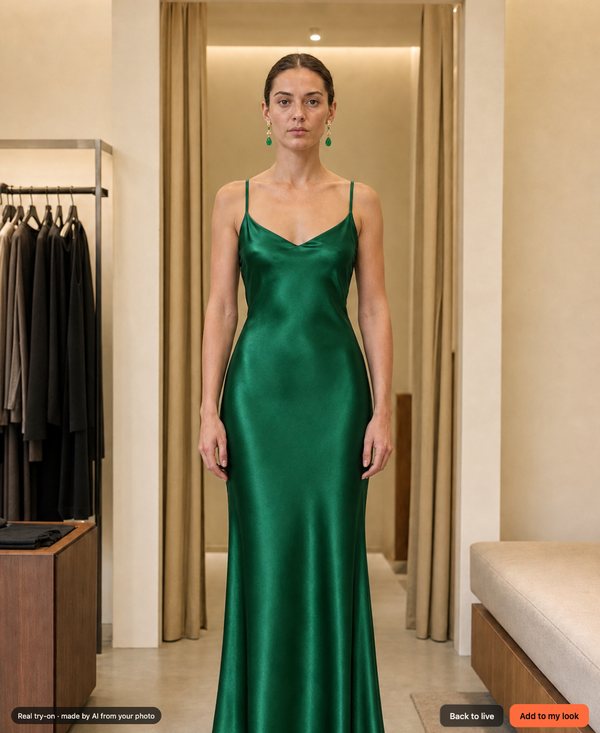
AI-assisted design works best when it starts from evidence rather than a blank prompt. When the same request goes unanswered in your stores week after week, it can become a brief; AI can then draft concepts in your brand's style, and shoppers can try them on screen before anything is sampled. Designers decide which briefs are worth pursuing, which concepts go forward and what finally gets made.
This guide is for design directors, heads of product and merchandising leads at fashion and jewellery brands who want to use AI in the design process without losing control of the brand, or creating IP problems they did not have before.
What does AI-assisted design mean for a fashion or jewellery brand?
In practice it covers a few specific jobs. McKinsey's analysis of generative AI in fashion lists turning sketches, mood boards and descriptions into high-fidelity designs, including 3D models of jewellery, and generating options and variations from a brand's past lines and inspiration imagery. It estimates that generative AI could add $150 billion to $275 billion to the apparel, fashion and luxury sectors' operating profits within three to five years, and frames the technology as augmentation rather than automation: giving creative teams tools to do some tasks much faster so they have more time for the work only they can do.
The industry has moved since then. In The State of Fashion 2026, more than 35 percent of executives said they already use generative AI in areas such as image creation, copywriting and product discovery. The same report stresses protecting the creativity that makes fashion work, which is the point of this guide.
Where should a design brief come from?
Most AI design experiments begin with a prompt: "a summer dress in the style of our brand". That produces images, not answers. A better starting point is a gap in demand that you can see in your own stores.
Repeated unmet requests are the most useful kind. We covered how to capture them in our guide to unmet demand. A request becomes a candidate for a brief when it:
- Repeats across several stores, over several weeks.
- Is specific about at least one attribute: a colour, a cut, a length, a metal, an occasion or a price.
- Is not already met by something in your range or arriving soon.
- Fits the brand, in the judgement of the design team.
Examples of what that looks like: a long-sleeved evening dress in a deep green, asked for in Dubai and London; a men's signet ring in yellow gold under €600, asked for in Paris and Milan; a wedding-guest look in a lighter fabric for summer in New York. Each is a gap in colour, cut, occasion or price, and each names a customer.
What goes into a good brief?
A brief turns a signal into instructions a designer, or a design tool, can work from. Keep it to one page:
- The evidence: how many shoppers asked, in which stores, over what period, and what they were offered instead.
- The customer and the occasion.
- The price band and target margin.
- Constraints: fabrics or metals on hand, factories, lead times, minimums.
- Brand codes to keep: silhouettes, details, hardware, finishes that make a piece yours.
- What to avoid: anything too close to an existing piece, yours or anyone else's.
How do you get concepts that look like your brand?
The most important input is your own work. Concepts drafted from your catalogue, archive and brand codes look like your brand. Concepts drafted from a general prompt look like everyone's. McKinsey makes the same point about marketing: copying what other brands do can work against the identity a brand has spent years building.
Practical rules that help:
- Ground every concept in your own pieces. Start from styles in your range and vary the attribute the brief asks for.
- Never prompt with another designer's or house's name.
- Ask for many options, then choose. The value is in breadth; the designer's eye does the selecting.
- For jewellery, check wearability early. Stone settings, clasp types, chain weights and earring lengths need to be physically possible and comfortable, which a concept image will not guarantee.
Ateliq's designer agent works this way: from the gaps in demand, such as a colour, a cut, an occasion or a price, it drafts design concepts in the brand's own style for the design team to review.
How can you test concepts with shoppers before sampling?
Sampling is slow and expensive, and many samples are never produced. McKinsey notes that designers using generative AI tools can try many design variations without producing expensive samples. The next step is to show the strongest concepts to real shoppers.
If concepts can appear on an in-store screen, shoppers can try them alongside the pieces you stock. In Ateliq, concepts can be tried on the mirror before you sample. Useful measures are the same as for stocked pieces: how often a concept is tried, how often it is kept or sent to a phone, and what shoppers ask about it.
Read the results with care.
- Interest is not a forecast. Use try-on counts to rank concepts against each other, not to set buy quantities.
- Compare like with like. Put concepts next to similar stocked pieces so you have a baseline.
- Be clear with shoppers. Label concepts as concepts, so nobody expects to buy them that day.
What about IP and brand consistency?
This is where AI-assisted design needs the most care. Three areas matter. None of this is legal advice; involve your IP counsel early.
Who owns an AI-assisted design?
In the US, the Copyright Office's January 2025 report on copyrightability concluded that, with current technology, prompts alone do not give a user enough control to be the author of the output. It also said that human authors are entitled to copyright in their own expression that is perceptible in AI-assisted work, and in creative selection, arrangement or modification of the output. For brands, the practical lesson is to keep the designer's contribution substantial and documented: sketches, edits, choices and the reasons for them.
Are you too close to someone else's design?
McKinsey notes that designers are sometimes criticised for derivative and copycat designs, and that ownership of AI-generated work will be decided case by case until there is strong legal precedent. Check concepts against competitors' current ranges, not only your own, and keep records of how each concept was developed.
Does showing a concept in store count as disclosure?
It may. In the EU, the EUIPO explains that disclosing a design to the public can create an unregistered EU design right, but can also destroy the novelty of a registered design if you do not apply within 12 months. An unregistered right also requires proof that someone actually copied you. If you plan to show concepts to shoppers in Paris or Milan, decide beforehand whether you want to register them.
Where do designers stay in charge?
AI can widen the funnel and shorten the loop. It does not decide what the brand is. Designers should own:
- Which signals become briefs. Not every gap is worth filling.
- Which concepts go forward, and how they are refined.
- Fit, materials and construction, from first sample to final production.
- What the brand will not do, however often shoppers ask for it.
Run this way, the loop is simple: shoppers ask, the brand listens, designers choose, shoppers try, and only then does anything get sampled. The State of Fashion 2024 called this generative AI's creative crossroads: the value lies beyond automation, in enhancing the work of human creatives.
Sources
- McKinsey: Generative AI in fashion, March 2023
- McKinsey and The Business of Fashion: The State of Fashion 2026
- McKinsey and The Business of Fashion: The State of Fashion 2024
- US Copyright Office: Copyright and Artificial Intelligence, Part 2: Copyrightability, January 2025
- EUIPO: FAQ on unregistered EU designs
Questions people ask
Where should AI-assisted design start?
With evidence rather than a blank prompt. Requests that repeat across stores and weeks, name a specific colour, cut, occasion or price, and are not met by the current range make the best briefs.
Can brands test design concepts before sampling?
Yes. Concepts can be shown to shoppers on in-store screens and compared with similar stocked pieces by how often they are tried, kept and asked about. Use the results to rank concepts, not to set buy quantities.
Who owns a design made with AI?
In the US, the Copyright Office has said prompts alone are not enough for authorship, while human selection, arrangement and modification can be protected. Keep the designer's contribution substantial and documented, and take advice from IP counsel.