AI for bridal and engagement ring appointments
Where AI helps jewellers before, during and after a bridal or engagement ring appointment, from preparing a curated selection to follow-up, with the advisor in charge.
AI helps most around a bridal appointment rather than in place of it. Before the visit, it turns what a couple has already said and saved into a brief and a prepared selection. During the visit, it lets them compare settings, metals and matching pieces quickly while the advisor leads. Afterwards, it keeps the follow-up timely and personal. The advisor stays at the centre, because an engagement ring is a high-trust purchase that people want a person to guide them through.
What does a bridal appointment have to get right?
The engagement ring is one of the largest single jewellery purchases most people make, and the way people buy it is changing. The Knot's Real Weddings Study 2026, which surveyed couples married in 2025, gives a clear picture, as reported by JCK and Rapaport:
- Most still buy in person. 64% bought their ring in store, and about a third online.
- They compare. On average, proposers visited two retailers and looked at 10 rings in a physical location.
- The recipient is involved. 79% of ring recipients took part in the process, and a quarter of couples shopped at a retailer together before the proposal.
- Decisions are fairly quick once started. 77% of proposers spent four months or less on research and purchase, though 57% started looking more than six months ahead.
- Preferences have shifted. Lab-grown centre stones accounted for 61% of engagement ring purchases, average spend was $4,600, and 39% of couples chose yellow gold.
Taken together, a bridal appointment is often one of only two in-person chances to win the sale, with a couple who arrive informed and with firm opinions. Bain and Altagamma also point to a rise in customisable designs as one reason jewellery has led luxury growth, according to Retail Times. More choice makes preparation matter more.
How can AI help prepare for a bridal appointment?
Most of the value is in the hour before the couple arrive.
A brief instead of a blank page
When a couple book, they usually leave clues: rings saved online, a budget range, a stone shape, a metal, a timeline, sometimes a note that the proposal is a surprise. AI can turn those scattered signals into a one-page brief for the advisor: what they have looked at, what they seem drawn to, the questions they are likely to ask, and what they haven't decided yet. The advisor walks in already knowing the conversation.
A selection prepared from stock
From the brief, AI can suggest which settings, stones and bands to have ready, drawn from what is actually in stock or can be brought in. Brilliant Earth describes this approach in its annual report: its showrooms are appointment-driven, and it uses customer data to curate the inventory for in-person appointments, so visitors see a personalised and relevant selection.
Questions answered before they are asked
Couples now arrive with questions about lab-grown and natural stones, about certification and about resale. AI can draft clear, consistent answers from the brand's own policies for the advisor to check and use. It should prepare the advisor, not speak for them.
How does AI help during the appointment?
In the room, the advisor leads. AI works in the background and on a screen when it is useful.
- Comparing settings and metals. The same centre stone can be seen in a solitaire, a halo or a three-stone setting, in yellow, white or rose gold or platinum, without bringing out a dozen samples. Brilliant Earth's Virtual Try On, for example, lets customers see a ring with different stone sizes, shapes and colours on their own hand.
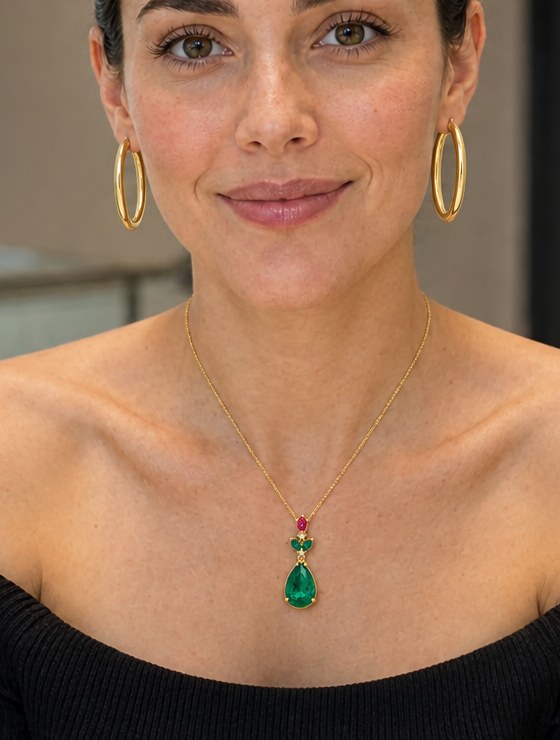
- Matching pieces. Wedding bands, and the earrings or pendant for the day itself, often come up once the ring is chosen. Ateliq's counter screen is built for earrings, necklaces and pendants rather than rings, and it is most useful in a bridal appointment at this point: the couple can see wedding-day pieces worn in a photo made from the exact catalogue pieces, ready to keep.
- Notes that write themselves. What the couple loved, what they ruled out and why, and the budget they settled on can be captured as the appointment runs, so the advisor doesn't have to stop and type.
- Quick answers to technical questions. Carat, cut grades, metal care and resizing policy can be pulled up for the advisor to confirm.
That last point needs care. Signet Jewelers' 2026 annual report says it uses and expects to expand AI across product discovery, customer service and marketing, and it also warns that AI systems may produce outputs that are inaccurate, incomplete or misleading. In a bridal sale, a wrong answer about a stone or a returns policy costs trust that is hard to win back. The advisor confirms anything that matters.
What should follow-up look like after a bridal visit?
Most couples leave without buying on the first visit, and many will visit a competitor. The follow-up decides whether they come back.
- A clear summary. The rings and pieces they liked, with photos and prices, sent to the phone of the person who asked for it, the same day.
- Timely reminders. With most proposers buying within four months of starting, a follow-up after weeks of silence is often too late. AI can suggest when to get back in touch and with what.
- Handling the surprise. If the proposal is a secret, follow-up must go only to the person who booked. This should be a rule the system enforces, not something an advisor has to remember.
- What comes next. Wedding bands, wedding-day jewellery, and later anniversaries.
All of this should rest on consent. In Ateliq, a style profile exists only with the shopper's OK: their size, their occasions, what they love and what they nearly bought. A bridal client who did not opt in should not be followed up by a machine at all.
What stays with the advisor?
The parts of a bridal appointment that win the sale are human ones:
- Reading the couple: who is deciding, what they are nervous about, when to talk and when to stay quiet.
- Explaining stones honestly, with the grading report and a loupe.
- Steering budget conversations, including finance options, with tact.
- Custom design consultations with the bench jeweller or designer.
- Putting the ring on the hand, and the moment that follows.
Good AI gives advisors more time for these moments. It does the preparation, the notes and the reminders, the work that takes time away from clients.
How do you know it's working?
Track a few numbers for appointments supported by AI against those that aren't:
- Appointment-to-sale conversion, first visit and within 90 days.
- Average transaction value, and the attach rate of bands and wedding-day jewellery.
- Time from first appointment to purchase.
- Response to follow-up, and how many couples return for a second visit.
- Advisor time spent preparing and writing notes, before and after.
The aim is not more automation. It is a couple who feel the advisor knew exactly what they were looking for.
Sources
- JCK: Lab diamonds and the engagement market (The Knot Real Weddings Study 2026)
- Rapaport: Lab-grown "taking over" engagement-ring spending (The Knot)
- Retail Times: Global luxury stays resilient (Bain & Company and Altagamma)
- Brilliant Earth Group: Form 10-K for 2025
- Signet Jewelers: Form 10-K for fiscal 2026
Questions people ask
How can AI help prepare for an engagement ring appointment?
It can turn what a couple has saved and said, such as budget, stone shape, metal and timeline, into a one-page brief for the advisor and suggest a selection to have ready from stock. The advisor arrives already knowing the conversation.
Do couples still buy engagement rings in store?
Yes. In The Knot's Real Weddings Study 2026, covering couples married in 2025, 64% bought their ring in store, and proposers visited two retailers and looked at 10 rings in person on average.
What should stay with the jewellery advisor rather than AI?
Reading the couple, explaining stones honestly with the grading report, budget and finance conversations, custom design consultations and putting the ring on the hand. AI should handle preparation, notes and reminders, and the advisor should confirm any technical answer.