A brand-safe AI stylist: voice, rules, stock and testing
How to keep an AI stylist on brand: its name and voice, rules on returns and offers, grounding in your own stock and prices, approved trends, hand-over and testing.
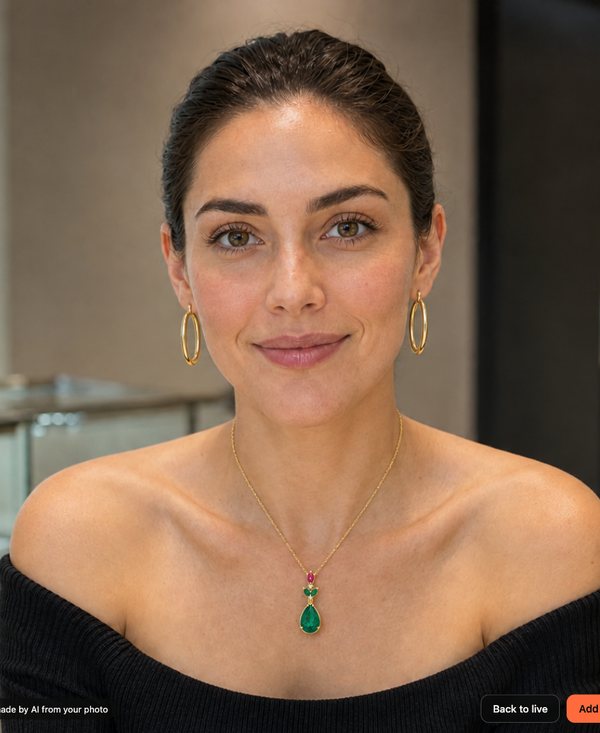
A brand-safe AI stylist speaks in the brand's own name and voice, recommends only what is in stock in that store at that store's prices, follows written rules on returns, offers and topics it must avoid, uses only trends the brand has approved, and hands over to a person when it should. None of that happens by default. It has to be designed, written down and tested before the screen goes on the floor.
Public chatbot failures over the past few years show what is at stake. When an AI speaks for your brand, its promises are your promises.
Why does brand safety matter more on a shop floor?
Online, a chatbot answer is read privately in a small window. In a store, the stylist speaks out loud, on a screen with your name on it, often with friends or other shoppers listening. A wrong answer about a return policy or a careless remark about how something fits is not a support ticket. It is a moment in your boutique.
The legal position is also clear in at least one case. In Moffatt v. Air Canada, 2024 BCCRT 149, British Columbia's Civil Resolution Tribunal held the airline responsible after its website chatbot told a customer he could apply for a bereavement fare retroactively, which the airline's policy did not allow. Air Canada argued the chatbot was responsible for its own actions. The tribunal called that "a remarkable submission" and said: "It should be obvious to Air Canada that it is responsible for all the information on its website," as Public Citizen's summary quotes. A stylist that invents a discount in a London store is making the same kind of promise.
What are the known failure modes?
Most problems with customer-facing AI fall into a handful of patterns.
- Inventing policy. The Air Canada case is the standard example: a plausible answer about a rule that did not exist.
- Being talked out of its rules. In January 2024, a customer got parcel company DPD's chatbot to swear and write a poem criticising the company. DPD told the BBC that "an error occurred after a system update" and that the AI element was immediately disabled, as reported by Fox Business. Note the cause: a change to the system, not a new kind of question.
- Being confidently wrong. In March 2024, The Markup found that New York City's MyCity chatbot told business owners they could take a share of workers' tips and refuse cash, both of which are against the law in the city.
- Prompt injection. The OWASP project describes this as what happens "when user prompts alter the LLM's behavior or output in unintended ways". Its guidance recommends constraining model behaviour, filtering inputs and outputs, requiring human approval for high-risk actions and adversarial testing.
- Selling what you don't have. A general-purpose model will happily describe a "silk midi dress in sage" that is not in your range, or quote last season's price.
Each of these has a design answer. The rest of this guide sets them out.
How should a stylist sound like your brand?
Start with the name. A stylist called by your brand, rather than by a software vendor, makes it clear whose voice this is, and it also makes clear who is accountable for what it says. Then write a short voice guide, the kind you would give a new hire:
- Register. Warm and precise for a Place Vendôme jeweller; relaxed and quick for a contemporary label in Brooklyn.
- Length. Spoken answers should be a few sentences. Long paragraphs read aloud feel like a lecture.
- Words you use and words you don't. "Pieces" or "items", "client" or "customer", how you describe metals and stones.
- Honesty. It should be clear the stylist is an AI. From 2 August 2026, Article 50 of the EU AI Act requires AI systems that interact with people to be designed so that people are informed of it, unless that is obvious.
What rules should it follow?
Write them down as you would a policy for staff, then give the stylist exactly that text. Vague instructions such as "be helpful about returns" produce invented answers. Specific ones produce correct answers.
Returns and exchanges
State the policy word for word, including exceptions for engraved, resized or made-to-order pieces. Where it varies by store, give each store its own version.
Prices and offers
The stylist should quote only prices and offers from your own system, in the store's own currency, with start and end dates. It should never negotiate, invent a discount or promise a price match.
What it must never say
- Comments on a shopper's body, weight or age.
- Claims about investment value, resale value or certification that are not in your product data.
- Delivery or alteration dates it cannot check.
- Opinions on competitors, news, politics or anything outside styling and your products.
What to do when it doesn't know
Say so, briefly, and offer to bring someone over. "I'm not sure about that, let me call a stylist" is a good answer. A confident guess is a bad one.
How do you ground it in your own stock and prices?
The single most effective safeguard is to let the stylist recommend only from your live catalogue for that store. In practice that means:
- Every suggestion is a real product, with its own photo, price and availability.
- Sold-out pieces drop off and new stock appears without anyone retyping it.
- Facts about materials, stones and sizes come from your product data, not from the model's general knowledge.
- If nothing in stock answers the question, the stylist says so. That gap is useful information for your buyers.
Grounding also protects the brand's taste. A stylist that can only choose from your range cannot drift into styling your clients in someone else's look.
Where should trend advice come from?
"What's in this season?" is one of the most common questions a stylist will hear, and a general model's answer will be generic, possibly out of date, and not necessarily yours. A better pattern is a trend board: a short, dated summary of what is rising in a city, drafted from fashion press and social coverage, then reviewed and approved by the brand before the stylist may use it. The stylist then talks about trends the way your own team would, using your pieces as the examples.
When should it hand over to staff?
An AI stylist does not replace the people on your floor; it works with them. Decide the hand-over points in advance:
- The shopper asks for a person.
- Payment, fitting, measuring and alterations.
- Complaints, or anything about an earlier purchase.
- Questions the rules don't cover, or a conversation that is going in circles.
- High-value or bespoke requests, where your team would want to be involved anyway.
Make the hand-over physical and quick: a button on the screen that brings someone over, not an instruction to go and find a sales associate.
How do you test it before launch?
Treat it like a new hire's trial period, with a script.
- Collect real questions. Ask your floor team for the hundred questions they hear most: occasions, sizes, gifts, returns, care, "does this suit me?".
- Write the right answers. For each, note what a good answer must include and must not include.
- Add adversarial questions. Ask for a discount. Ask about a competitor. Tell it to ignore its rules. Ask for a piece you don't stock. Ask it to comment on someone's weight. Swear at it.
- Check every answer against stock and policy, not just for tone.
- Run a staff-only week in one store before shoppers see it.
- Re-run the whole set after every change to the model, the prompts, the catalogue connection or the rules. The DPD incident followed a system update.
After launch, keep reviewing a sample of conversations, track hand-overs and "I don't know" answers, and fix the rules rather than patching individual replies.
A short checklist
- Named by the brand, with a written voice guide.
- Rules for returns, prices and offers given word for word, per store.
- A written list of what it must never say.
- Recommendations only from that store's live stock and prices.
- Trend advice only from boards the brand has approved.
- Clear hand-over points and a one-tap way to call staff.
- A test set, including adversarial questions, re-run after every change.
How Ateliq approaches it
In Ateliq, each brand names its own stylist, and it speaks in the brand's name and voice. It learns the brand's stock, prices, offers and rules on returns, and only suggests pieces that are in stock in that store, at that store's prices. Ateliq drafts a weekly trend board for each city, and shoppers see it only after the brand approves it. "Call a stylist" on the screen brings someone from the floor team over, and payment, fitting and alterations stay with the brand's own staff.
Sources
Questions people ask
Is a retailer responsible for what its AI chatbot says?
In Moffatt v. Air Canada (2024), a Canadian tribunal held the airline responsible for wrong policy information from its website chatbot and rejected the argument that the chatbot was responsible for its own actions. Brands should treat an AI stylist's promises as their own.
How do you stop an AI stylist recommending products you don't sell?
Let it recommend only from the live catalogue for that store, with prices, offers and availability from your own system. When nothing in stock fits, it should say so and offer to call a member of staff.
How should an AI stylist be tested before launch?
Build a test set from the questions your floor team hears most, add adversarial questions such as asking for discounts or telling it to ignore its rules, and check every answer against stock and policy. Re-run the whole set after every change to the model, prompts, catalogue or rules.