Top 10 agentic AI use cases for fashion retail in 2026
Ten ways AI agents help fashion stores, from a stylist that answers from live stock and real-looking try-on to unmet demand, follow-ups, campaigns and store reports.
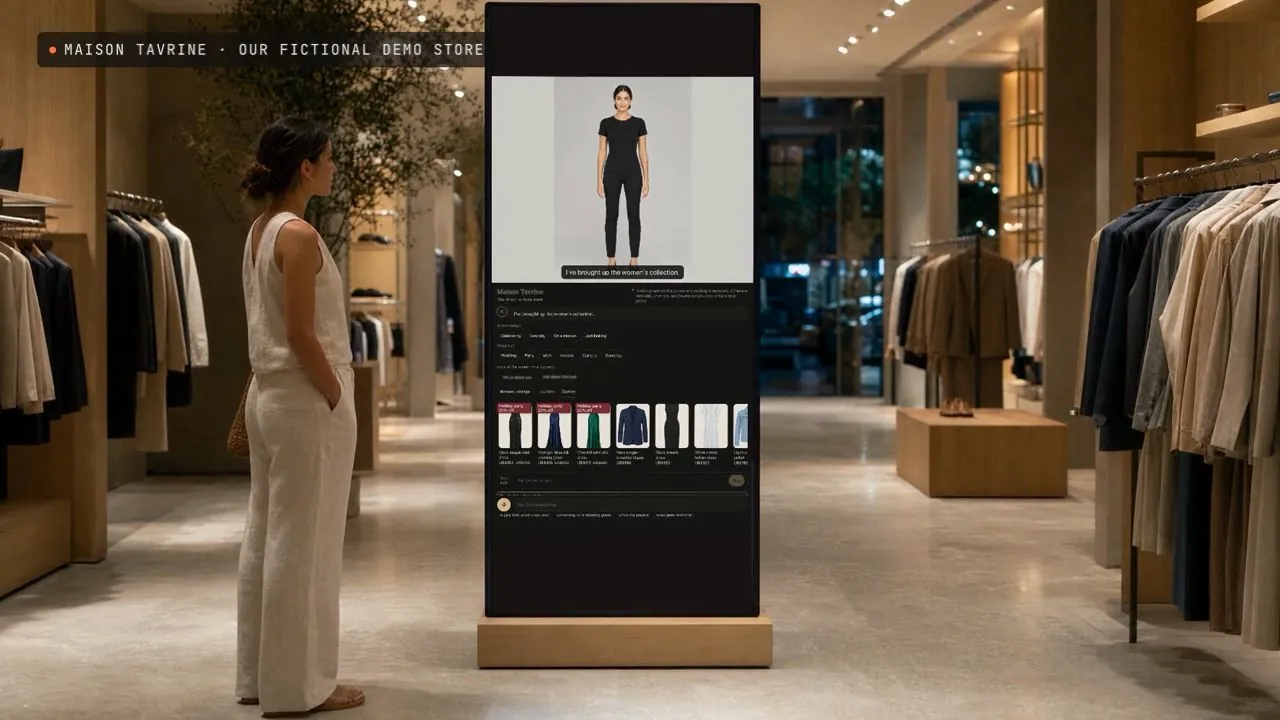
The ten agentic AI use cases that matter most to fashion retailers in 2026 are: an in-store stylist that answers from live stock, try-on that looks real, capturing unmet demand, size and fit advice, follow-ups shoppers asked for, product content from the brand's own photos, festive and seasonal campaigns, allocation and stock transfers, weekly store reports, and returns and kept sales. In each one an agent reads, drafts or acts within limits the brand sets, and a person approves anything a shopper or the public will see.
This guide is for heads of retail, store operations, e-commerce and marketing at fashion brands with their own stores, in India, the Gulf, Europe or the United States. For every use case we set out the job today, what an agent does, the human approval point, the data it needs, how to measure it and the risks. Where Ateliq, our own product, does the job today we say so. Where it does not, we describe where the market is heading.
What does "agentic" mean in fashion retail?
An AI agent reads, decides and acts within limits. A chatbot answers "do you have this in a medium?". An agent checks this store's stock, suggests the medium in the colour that is in, offers to hold it, and tells a member of staff. Behind the glass, an agent can read last week's numbers every Monday and draft the store report before anyone asks.
The limits are the product. Agree in writing which actions an agent may take alone (answering from stock, logging a request, drafting a report) and which need a person (prices, discounts, messages to customers, anything posted in public, orders and transfers). Retailers stay responsible for what their agents say: in Moffatt v. Air Canada, a Canadian tribunal held the airline responsible for its chatbot's wrong answer, as we covered in a brand-safe AI stylist.
The ten at a glance
| Use case | What the agent does | Who approves | In Ateliq today? |
|---|---|---|---|
| 1. In-store stylist | Answers from this store's stock, sizes, prices and offers; hands the sale to staff | Head office sets its rules | Yes |
| 2. Try-on that looks real | Live try-on, then a photo of the shopper in the exact pieces | The shopper asks for each photo | Yes |
| 3. Capturing unmet demand | Logs what shoppers asked for and could not find | Merchandising acts on it | Yes |
| 4. Size and fit advice | Matches the shopper's sizes to each garment | Staff confirm in the fitting room | Partly; FabFit in development |
| 5. Follow-ups shoppers asked for | Queues messages for opted-in shoppers about pieces in stock | Templates approved by the brand | Yes |
| 6. Product content | Tags products, drafts shoots and lookbooks from the brand's photos | A person accepts each tag and image | Yes |
| 7. Festive and seasonal campaigns | Drafts posts, lookbooks and a content calendar tied to live offers | Marketing approves and posts | Yes |
| 8. Allocation and transfers | Proposes where stock should go | Merchandising or planning | Market |
| 9. Weekly store reports | Drafts store reports; answers head office's questions | Read by managers | Yes |
| 10. Returns and kept sales | Tracks which sales were kept; advises before a return | Store staff | Partly |
1. An in-store stylist that answers from live stock
The job today. On a busy afternoon, most shoppers browse alone. They cannot ask whether a dress comes in their size, what goes with it, or whether the festive offer applies, unless they find a member of staff.
- What the agent does: answers questions out loud or on a screen from this store's catalogue, sizes, prices and offers; completes a look with a piece or two; compares two pieces; calls staff when a shopper wants help; and turns "I'll take it" into a hand-off to the till or the shopper's phone.
- Who approves: head office sets the stylist's name, tone, rules and the offers it may mention. It never invents a discount.
- Data it needs: live catalogue and stock per store, prices and offers, returns policy and the brand's voice.
- How to measure it: share of visitors who use it, staff calls from the screen, conversion and basket size against a matched control store.
- Risks and guardrails: a stylist that recommends what the store does not have, or promises what the policy does not allow. Ground every answer in the store's own data, test it against your floor team's most common questions, and always offer a "just this" exit.
In Ateliq today. A brand-named stylist runs on a full-length mirror and a counter screen. It answers from the store's catalogue, sizes, prices and offers, completes the look with at most two add-ons, compares two pieces side by side and always offers a "just this" exit. Buying creates a hand-off: hold in store, a Razorpay or Stripe pay link, the brand's online cart, or the counter. The screens never take payment, and the hand-off links the visit and the associate who helped to the sale.
2. Try-on that looks real
The job today. Fitting rooms have queues, sarees and lehengas take time to drape, and a shopper who is unsure leaves to think about it, often for good.
- What the agent does: shows pieces on the shopper live as they move, and on request makes a photo of them wearing the exact catalogue pieces, sent to their phone.
- Who approves: the shopper asks for each photo. The brand decides which pieces can be tried.
- Data it needs: clean product photos of every piece, and consent before the camera starts.
- How to measure it: try-ons per day, photos sent to phones, and conversion of pieces tried on screen against pieces not tried.
- Risks and guardrails: cameras bring privacy duties. Ask first, track on the screen, record nothing, and never infer body shape, race or weight. Our guide to privacy by design for in-store AI covers the law.
In Ateliq today. Shoppers try 21 kinds of piece live, including sarees, lehengas and kurtas. On request, Ateliq makes a photo of the shopper wearing the exact pieces from the brand's own product photos. It goes to their phone and is deleted after 30 minutes. Tracking runs on the screen and nothing is recorded.
3. Capturing unmet demand
The job today. "Do you have it in rust?" "Anything for a sangeet under ₹8,000?" The till records what sold, not what shoppers came for and could not find. Most of it is lost.
- What the agent does: logs every request the store could not answer from stock, groups requests by phrase, store and week, and sends the list to planning.
- Who approves: merchandisers decide whether a gap means a transfer, a re-order, a buy or a new design.
- Data it needs: the shopper's question, the store's stock at that moment, and a consistent set of fields.
- How to measure it: requests logged per week, gaps acted on, and sales of pieces bought or made because of them.
- Risks and guardrails: act on requests that repeat across stores and weeks, not on one loud day, and keep the record free of personal details.
In Ateliq today. "Asked for, not carried" groups what shoppers asked for that the store does not stock, by phrase and store, to download or send to a planning system. Where requests repeat, the Designer drafts concepts for the gap.
4. Size and fit advice
The job today. One brand's M is another's L, Indian, UK, US, EU and Gulf sizes differ, and size and fit drive returns online. In store, a shopper guesses, tries two sizes, or leaves.
- What the agent does: asks the sizes a shopper knows, matches them to each garment's own size chart, checks stock in those sizes, and says plainly when the shopper sits between two.
- Who approves: the shopper and the fitting room. Staff handle fitting and alterations.
- Data it needs: a size chart per garment, stock by size, and what shoppers bought and kept.
- How to measure it: fitting-room trips per sale, size exchanges and size-related returns.
- Risks and guardrails: a camera guess dressed up as certainty. Ask, do not guess, and never ask weight or body shape.
Where Ateliq is today. Shoppers tap the sizes they wear for tops and bottoms, or skip; the stylist uses them to check stock and never guesses a size from the camera. FabFit, an agentic size engine that matches shoppers to each garment's own chart and checks fit before purchase or return, is in development with early access for design partners. It is not yet available.
5. Follow-ups shoppers asked for
The job today. A shopper loves a jacket that is not in her size. Staff promise to call. Sometimes they do.
- What the agent does: for shoppers who opted in, queues a short message when a piece they tried is back in their size, or about a piece they tried and did not buy, checking stock first.
- Who approves: the brand approves every message template; the shopper confirms consent and can stop at any time.
- Data it needs: consent records, what the shopper tried and saved, and live stock.
- How to measure it: opt-in rate, replies, return visits and sales from follow-ups against shoppers who were not messaged.
- Risks and guardrails: too many messages, or messages to people who never agreed. Cap the number, set quiet hours, and keep contact details away from the agent itself.
In Ateliq today. Only shoppers who opt in and confirm with a code hear back, by email or WhatsApp. The clienteling agent queues follow-ups with up to three in-stock pieces each and never sees a name, email or phone number. Messages use templates the brand approved, at most two a week, never between 9pm and 9am, and every one carries an unsubscribe link. Follow-up programmes start switched off.
6. Product content from the brand's own photos
The job today. Every new style needs tags, copy, studio shots and on-model images. Ethnic wear adds its own vocabulary (anarkali, sharara, Banarasi, bandhani) that generic tagging tools miss.
- What the agent does: suggests tags for new and changed products from their photos, and drafts product shoots, on-model images from flat lays and short clips from the brand's own photos.
- Who approves: a person accepts each tag and approves each image before use.
- Data it needs: product photos with rights recorded, and the brand's tag list.
- How to measure it: days from goods received to live listing, images per style, and search and filter use on the site.
- Risks and guardrails: an AI shot that changes the product misleads the buyer. Keep the piece itself untouched and label AI-made images where the law or your policy asks.
In Ateliq today. The cataloguer suggests tags daily from product photos, including Indian ethnic wear and jewellery terms, and a person accepts each tag. The photographer makes product shoots and short clips from the brand's own photos on request: studio white, lifestyle, on a model from a flat lay, editorial and more, up to ten images and two clips per shoot. The piece itself is never changed.
7. Festive and seasonal campaigns
The job today. Fashion retail in India runs on Diwali, Durga Puja, Onam, Eid and the wedding season; elsewhere on Ramadan, Black Friday and the holidays. Marketing teams build lookbooks, posts and calendars for each, often with stock that has already moved.
- What the agent does: drafts a weekly lookbook from best sellers and live trends, a few social posts tied to offers that are actually running, and next week's content calendar.
- Who approves: marketing approves every draft and does the posting.
- Data it needs: live offers with dates and store scope, stock, the approved trend board and the brand's voice.
- How to measure it: hours per campaign, posts published from drafts, and sales of featured pieces.
- Risks and guardrails: promoting pieces that are sold out or offers that have ended. Tie every draft to live stock and live offers, and never let an agent post on its own.
In Ateliq today. Every Wednesday the marketer drafts a lookbook from best sellers and live trends, up to three social posts tied to live offers, and next week's content calendar. Head office runs offers and initiatives such as a festive sale or a trunk show, with a banner on the screen and a brief for the stylist. Approving a social post does not post it.
8. Allocation and stock transfers
The job today. Stock lands in the wrong store: kurtas sell out in Pune while the same sizes sit in Lucknow. Planners rebalance from spreadsheets, often after the moment has passed. Unsold stock is also a compliance question now: since 19 July 2026, large companies in the EU may not destroy unsold clothes, clothing accessories and footwear, and medium-sized companies follow in 2030.
- What the agent does: watches sales, stock and demand by store, and proposes transfers and re-orders with the reason for each.
- Who approves: merchandising or planning approves every transfer and order.
- Data it needs: stock and sales by store and size, lead times, transfer costs, and unmet demand.
- How to measure it: full-price sell-through, stock-outs, markdown depth and transfer cost.
- Risks and guardrails: sales history understates sizes that sold out. Read it with requests and try-ons, which we covered in using try-on data in range planning and buying.
Where the market is heading. Ateliq does not allocate stock and does not write back to a POS or ERP. It can send its lost-demand data to a planning system. Planning vendors are adding agents that propose transfers for a planner to approve, and we expect in-store demand signals to feed them.
9. Weekly store reports and questions in plain words
The job today. Area managers wait for a dashboard someone has to build, and head office questions ("why is the Bandra store's conversion down?") take a day of exports.
- What the agent does: drafts a report for each store and one across all stores every week, and answers head office's questions in plain words, showing what it read.
- Who approves: nobody needs to approve a report, but every number should trace back to its source.
- Data it needs: sales, visits, try-ons, requests and, if you have them, door counts.
- How to measure it: hours spent on reporting, and actions taken from the reports.
- Risks and guardrails: confident answers from thin data. Ask the agent to show its sources and how many records an answer rests on, and give store managers only their own stores.
In Ateliq today. Every Monday the analyst drafts a report for each store and one across all stores: tried, asked for, bought, kept and returned, with what to do next. Head office asks its stores questions in plain words, and the retail lead answers from store data and lists exactly what it read. Store managers see only their own stores. With door counts imported, Ateliq shows the share of visitors who used the screens and went on to buy.
10. Returns and kept sales
The job today. A sale is counted on the day, and a return weeks later is filed somewhere else. Few stores know which in-store experiences lead to sales that are kept.
- What the agent does: links each sale to whether it was kept, partly returned or returned, and, before a return, checks the fit and suggests an exchange where it makes sense.
- Who approves: store staff handle every return and exchange.
- Data it needs: orders and returns from the commerce platform or ERP, and the return window.
- How to measure it: return rate, exchanges instead of refunds, and kept revenue rather than booked revenue.
- Risks and guardrails: an agent pushing shoppers to keep what does not fit. The goal is the right piece, not a refused refund.
Where Ateliq is today. With Shopify orders, an ERP or a payment provider connected, each hand-off becomes kept, partly returned or returned once the return window closes (30 days by default). A fit check before a return is part of FabFit, which is in development. Where the market is heading: returns agents that offer an exchange in the right size before a refund.
How to start in 90 days
Start in one to three stores with a matched control store, and with use cases that share data: the stylist, try-on and unmet demand all come from the same screen, and the weekly report shows their effect.
- Days 1 to 30: prepare. Connect the catalogue and stock, write the stylist's rules (offers, returns, what it may never say), agree who approves templates and posts, and record four to eight weeks of baseline for the pilot and control stores.
- Days 31 to 60: go live and watch. Install, train the floor team, and read every report. Fix the questions the stylist answers badly. Turn on follow-ups only once templates are approved.
- Days 61 to 90: measure and decide. Compare conversion, basket size, units per transaction and return visits with the control store. Look at the unmet-demand list with merchandising. Decide whether to keep, change or stop.
Our guide to measuring an in-store AI pilot sets out the method, and the top AI agent solutions for fashion retail lists vendors by part of the business.
Take the playbook, or see it live
All 40 use cases from this series, across fashion design, fashion retail, jewellery retail and jewellery design, are in one free guide with a readiness checklist, a 90-day pilot plan and a vendor scorecard: The Agentic AI Playbook for Fashion and Jewellery. To try the stylist yourself, open the live demo store.
The image at the top of this article shows our fictional demo store. The models are AI-generated.
Sources
Questions people ask
What is agentic AI in fashion retail?
AI agents that read, decide and act within limits the retailer sets. Instead of only answering a question, an agent can check this store's stock, suggest a size that is in, log a request it could not meet, draft the weekly store report or queue a follow-up for a shopper who opted in.
What are the top agentic AI use cases for fashion retail?
An in-store stylist that answers from live stock, try-on that looks real, capturing unmet demand, size and fit advice, follow-ups shoppers asked for, product content from the brand's own photos, festive and seasonal campaigns, allocation and stock transfers, weekly store reports, and returns and kept sales.
Which actions should a retail AI agent never take alone?
Setting prices or discounts, sending messages to customers from templates nobody approved, posting in public, and placing orders or stock transfers. Agree these limits in writing before launch; retailers stay responsible for what their agents say.
How do AI agents capture unmet demand in a store?
When shoppers ask a stylist or screen for something the store does not stock, the request is logged and grouped by phrase, store and week. Merchandisers then decide whether a repeated gap needs a transfer, a re-order, a buy or a new design.
How do you measure an AI agent in a fashion store?
Run a pilot in one to three stores against matched control stores, with four to eight weeks of baseline. Compare conversion, basket size, units per transaction, return visits and follow-up sales, and track usage such as try-ons and staff calls from the screen.