The Agentic AI Playbook for fashion and jewellery.
40 use cases, from design to the shop floor. For each one: the job today, what an agent does, who approves, the data it needs, how to measure it and the guardrails. With a readiness checklist, a 90-day pilot plan and a vendor scorecard.
- 40 use cases on cardsTen each for fashion design, fashion retail, jewellery retail and jewellery design, from trend briefs and tech packs to metal-rate pricing and karigar job cards.
- A readiness checklistTwenty questions on data, signals, approvals, people and trust, scored to tell you whether to start, pilot or scale.
- A 90-day pilot planTwo use cases, one owner, a control store, the measures to take and how to decide.
- A vendor scorecardTen weighted criteria and the questions to ask every vendor.
- India and global, honestly markedHandloom clusters, festive and wedding seasons, BIS hallmarking, EU product and AI rules, with sources. Each card says whether Ateliq does it today, in part, or not at all.
Who it's for: founders, heads of design, retail, merchandising and marketing, and store and workshop leads at fashion and jewellery brands who want to put AI agents to work with people still approving.
Thank you. Here is the playbook.
Your copy is ready to open or save.
What a use case looks like.
Every card follows the same shape: the agent drafts or calculates, and a named person approves.
Pricing from today's metal rate
The agent proposes the day's rate and prices every piece from net weight, purity, making charges and stones, with the breakdown on screen. Head office confirms the rate, and a stale rate never prices a piece. Measure price disputes and time spent on rates.
Designs from a shopper's chosen cloth
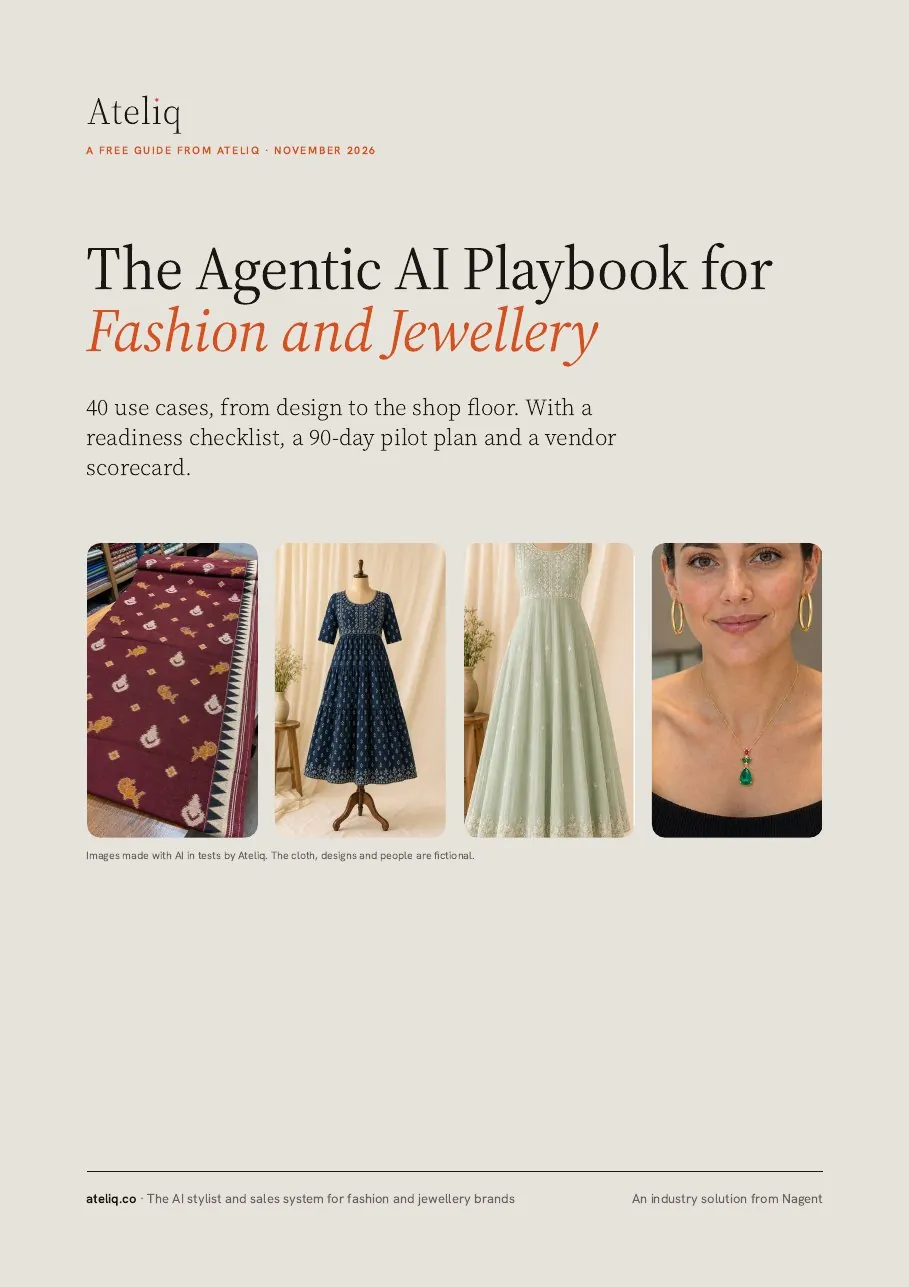
In a handloom or fabric store, the agent drafts dresses from the exact cloth she picked, keeping its weave, motifs and border, shows one on her and works out the cloth, stitching and days for the tailor. She chooses; the tailor confirms.
Capturing unmet demand
The agent logs what shoppers asked for and could not find, grouped by phrase, store and week, and sends it to planning. Merchandisers decide whether a gap needs a transfer, a re-order, a buy or a new design.