Top 10 AI agent solutions for fashion retail companies in 2026
Ten AI agent solutions for fashion retailers in 2026, from design and planning to online selling, try-on, clienteling and the store, and what to check.
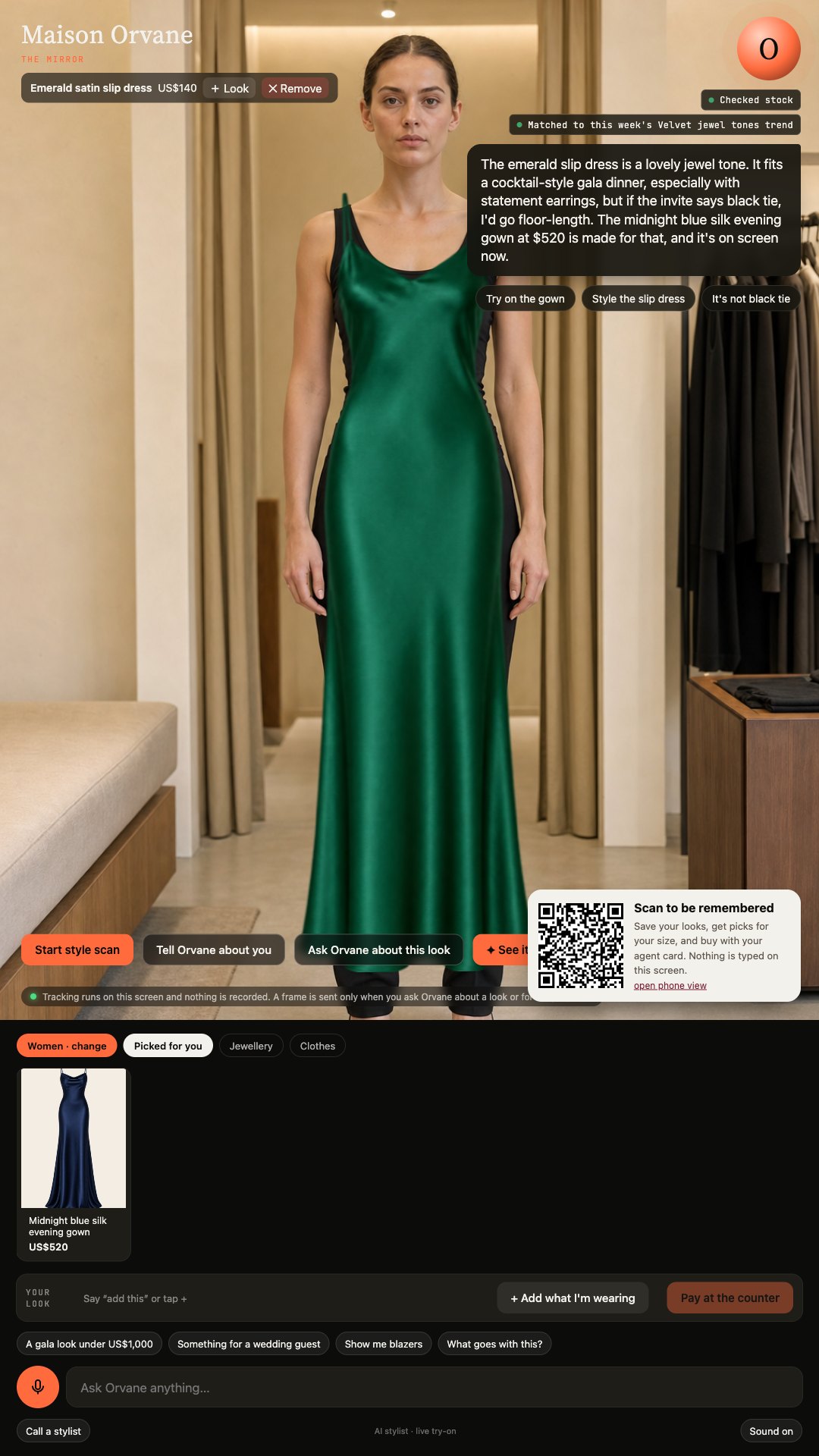
The ten AI agent solutions fashion retailers are most likely to shortlist in 2026 are Ateliq for the shop floor, Raspberry AI for design, Lily AI for product data, Blue Yonder for planning and allocation, Salesforce Agentforce Commerce, Shopify Sidekick, Google's Gemini Enterprise for Customer Experience and Bloomreach Clarity for online selling, Perfect Corp for try-on, and Tulip for clienteling. Each one covers a different part of the business, so most brands will use two or three of them, not one.
Ateliq is our own product, and we have put it first because it covers the moment the others leave out: the shopper in the store. The other nine follow in order from design to the store, and that order is not a ranking. Each one is described from the vendor's own announcements and from press coverage, as of November 2026.
What counts as an AI agent in fashion retail?
An AI agent does more than answer a question. It takes steps toward a goal, within limits a person sets. A shopping agent might check stock, offer store pickup and complete the order. A planning agent might spot a store that is about to run out and propose a transfer. A chatbot that only replies is not an agent.
For this list, a product had to meet four tests:
- it acts as well as answers;
- it is built for retail, and has fashion or apparel customers or fashion-specific features;
- it can be bought today, not only previewed;
- what it does is publicly documented by the vendor.
The ten at a glance
| Solution | What the agent does | Where it works |
|---|---|---|
| Ateliq | In-store AI stylist with live try-on on a mirror and counter screen | Shop floor |
| Raspberry AI | Design, product imagery and line sheets | Design and merchandising |
| Lily AI | Product attributes and copy that search engines and AI assistants read | Product data |
| Blue Yonder | Planning, assortment, allocation and replenishment | Planning and supply |
| Salesforce Agentforce Commerce | Shopping, B2B buying and merchant agents | Online store and service |
| Shopify Sidekick | Runs store tasks for the merchant; listings in AI assistants | Online store operations |
| Google Gemini Enterprise for CX | Shopping and customer service agents | Online store and service |
| Bloomreach Clarity | Conversational product search and advice | Online store |
| Perfect Corp | Virtual try-on and a selfie-based shopping agent | Online and in store |
| Tulip | Clienteling assistant for store associates | Store staff |
1. Ateliq: an AI stylist and sales system for the shop floor (our product)
Ateliq is Nagent's industry solution for fashion and jewellery retail. It puts a brand-named AI stylist on two in-store screens: a full-length mirror on the shop floor and a counter screen for jewellery and accessories. Shoppers try pieces on live, ask questions that are answered from that store's own stock and prices, and can ask for a photo-real try-on made from the exact catalogue piece. Requests the store cannot answer from stock are logged by theme, so merchandisers see what shoppers asked for and could not find.
Head office runs catalogue, offers, seasonal edits and the stylist's voice for every store from one place. It connects to Shopify and the major commerce and ERP systems, or takes a product file. Tracking runs on the screen and nothing is recorded. Nagent is ISO/IEC 27001:2022 certified and has a SOC 2 Type II report.
Good fit if: you are a premium fashion or jewellery brand with your own stores, and want the in-store visit to be as measurable as your website.
Watch for: Ateliq is new. We are taking design-partner pre-orders from a small group of brands, so there are no published customer results yet. You can try our fictional demo store at demo.ateliq.co. It is not a clienteling app or a point-of-sale system, and it works alongside both.
2. Raspberry AI: agents for design, merchandising and product imagery
Raspberry AI started as a generative design tool built for apparel, footwear and accessories, where general image models tend to miss construction detail. In September 2026 it announced a single agent workflow running from first concept through merchandising, wholesale, marketing and e-commerce. Brands named in that announcement include SKIMS, ALO, Savage X Fenty, Oscar de la Renta, Walmart and Steve Madden. In May 2026 it was one of six companies picked for the CFDA and OpenAI Innovation Hub.
Good fit if: your design and merchandising teams spend weeks on sketches, samples and line-sheet imagery before anything is sold.
Watch for: who owns the designs, how your own archive is used to train the model, and how designers stay in charge of what goes to sampling.
3. Lily AI: product data that AI shopping agents can read
When a shopper asks ChatGPT, Gemini or Google for "a linen midi dress for a summer wedding", the answer depends on whether your product data says linen, midi and wedding guest. Lily AI describes its Lily Max engine as finding the gaps in that data, writing attributes and copy in the words shoppers use, testing the change against a holdout and scaling what works across paid, organic, on-site and agentic channels. Marks & Spencer deployed it in 2026 to improve product discovery on Google Shopping and organic search.
Good fit if: you have thousands of styles, and your product titles and attributes were written for your own systems rather than for shoppers.
Watch for: how the lift is measured. Ask to see the holdout design, not only a before-and-after.
4. Blue Yonder: planning, allocation and replenishment agents
Fashion margins are won or lost on buying the right depth and sending it to the right stores. At NRF in January 2026, Blue Yonder added agents to planning that flag profit risks in merchandise financial plans and help build assortments from trend analysis, and it updated its Inventory Ops Agent. Its August 2026 release added returns projections to allocation and replenishment, and automatic distribution to stores when stock lands at the warehouse.
If you already plan in RELEX, it offers a comparable route. RELEX introduced packaged agents for forecasting, supply and plan stress-tests in the first half of 2026, and its RELEX Open lets outside agents connect through the Model Context Protocol (MCP).
Good fit if: you run seasonal buys across many stores and channels, and allocation is still worked in spreadsheets.
Watch for: fashion references for the agents specifically. Much of the published proof covers the wider platform, not the new agents.
5. Salesforce Agentforce Commerce: shopping and merchant agents for large online stores
Salesforce made its Shopper Agent, Buyer Agent and Merchant Agent generally available in July 2026. The Shopper Agent can check live stock, confirm delivery cut-offs, offer store pickup and complete the sale in one conversation, and it passes that history on to customer service. A ChatGPT integration was live at launch, with Google Search and Gemini to follow. Its Agentic Commerce Search can also run on storefronts not built on Salesforce. PacSun's Chief Digital and Information Officer, Shirley Gao, pointed to reaching Gen Z and Gen Alpha shoppers through the ChatGPT integration.
Good fit if: you already run Salesforce Commerce Cloud and Service Cloud, and want one agent across shopping and service.
Watch for: answers that go wrong. In Futurum Group's survey of 820 decision makers, reliability and hallucinations were the top concern with AI platforms, cited by 55%, as Futurum reports. Test the agent on your returns policy and size questions before launch.
6. Shopify Sidekick: an agent that runs the store for Shopify brands
Sidekick sits in the Shopify admin. A merchant describes a task in plain words, and Sidekick decides which tools and data to use. With the Winter '26 Edition, Shopify says Sidekick now takes the initiative and carries out complex tasks such as editing a theme. Developers can bring it into their own apps through Sidekick App Extensions, in preview. Separately, Shopify brings merchant catalogues to ChatGPT, Perplexity and Microsoft Copilot, so shoppers can find and buy products inside those assistants.
Good fit if: you are a direct-to-consumer fashion brand on Shopify with a small team.
Watch for: which features your plan includes. Some advanced features are reported to be limited to Shopify Plus, so check in your own admin.
7. Google Gemini Enterprise for Customer Experience: shopping and service agents
Google Cloud launched Gemini Enterprise for Customer Experience at NRF in January 2026. It packages a shopping agent, an agent studio for customer service and Vertex AI search, and Google says the agents can be set up in days. With the shopper's consent, the shopping agent can add items to the cart and check out.
Good fit if: your data and site already run on Google Cloud, and you want shopping and service in one agent.
Watch for: fashion proof. The retailers named at launch, including Kroger, Lowe's and Woolworths, are grocers and home-improvement chains, so ask how the agent handles size, fit and styling questions.
8. Bloomreach Clarity: conversational search and advice on your site
Bloomreach Clarity is a shopping agent that sits in on-site search. When a query is too broad, such as "shirts", it asks follow-up questions to narrow it down, as Bloomreach explains, and merchants can set its brand guidelines and tone of voice. TFG, South Africa's largest fashion and lifestyle group, runs it on its Bash platform. Bloomreach's case study reports a 35.2% rise in online conversion for TFG.
Good fit if: shoppers use your site search a lot and often leave without finding what they meant.
Watch for: how it fits your current search. Some features depend on also using Bloomreach Discovery.
9. Perfect Corp: virtual try-on and a selfie-based shopping agent
Perfect Corp is best known for AR try-on in beauty, and it has moved into fashion and jewellery. In January 2026 it released nine fashion try-on APIs, including watches, bracelets, rings, earrings and necklaces, with built-in MCP support so other AI agents can call them. Its YouCam AI Agent, shown at CES 2026, recommends products and looks from a selfie and a conversation. In August 2026 the Indian jeweller QWEEN added try-on for rings, earrings and bracelets on desktop and mobile.
Good fit if: you want try-on on product pages and apps, especially for jewellery, watches and eyewear.
Watch for: how pieces are scaled and attached, and whether try-on uses your exact product photos. We cover this in virtual try-on for fine jewellery.
10. Tulip: a clienteling assistant for store associates
Clienteling is how advisors keep a relationship with their best clients between visits. Tulip AI for Clienteling suggests messages, finds and segments clients and summarises results for associates, with either a person approving each message or automated outreach. In March 2026 Tulip merged with Salesfloor under the Tulip name, adding online assisted selling, appointments and mobile checkout. Mulberry and AMIRI are among its fashion customers.
Good fit if: a large share of your sales comes from repeat clients who know an advisor by name.
Watch for: how client data is consented and kept, especially across countries. See our guide to clienteling in 2026.
How should a fashion retailer choose?
Start with the problem, not the vendor. These questions narrow the list quickly:
- Where do you lose the most money? Markdowns and stock in the wrong store point to planning agents. Shoppers who leave without finding anything point to search and shopping agents. Quiet stores point to the shop floor and clienteling.
- What already runs your business? An agent from your commerce or planning vendor will have your data on day one. A specialist may do the job better but needs a connection.
- What is the agent allowed to do alone? Agree in writing which actions need a person: prices, discounts, messages to clients, orders. Good products let you set these limits.
- How will you measure it? Ask for a test against a control group or holdout, not only a before-and-after. Our guide on measuring an in-store AI pilot sets out a method.
- What happens to shopper data? Check consent, retention and where data is processed. Cameras in stores bring extra rules; see privacy by design for in-store AI.
Sources
- Unite.AI on Raspberry AI's agentic fashion workflow (September 2026) and TechCrunch on its Series A (January 2025)
- Lily AI and CXM Today on M&S and Lily AI
- Blue Yonder at NRF 2026 and Blue Yonder's agentic AI release (August 2026)
- RELEX first-half 2026 results and RELEX Open
- Salesforce, Agentforce Commerce release (July 2026), CX Today and Futurum Group
- Shopify Winter '26 Edition and PYMNTS on Shopify catalogues in AI assistants
- Google Cloud, Gemini Enterprise for Customer Experience (January 2026)
- Bloomreach Clarity, how Clarity works and TFG case study
- Perfect Corp fashion APIs (January 2026), YouCam AI Agent (CES 2026) and Indian Jeweller on QWEEN
- Tulip AI for Clienteling, Tulip and Salesfloor merger (March 2026) and Retail TouchPoints on AMIRI
Questions people ask
What are the best AI agent solutions for fashion retail in 2026?
Commonly shortlisted options include Ateliq for an in-store AI stylist, Raspberry AI for design, Lily AI for product data, Blue Yonder for planning and allocation, Salesforce Agentforce Commerce, Shopify Sidekick, Google Gemini Enterprise for Customer Experience and Bloomreach Clarity for online selling, Perfect Corp for virtual try-on and Tulip for clienteling. Each covers a different part of the business, so most brands combine two or three.
What is the difference between an AI agent and a chatbot in retail?
A chatbot replies to questions. An AI agent takes steps toward a goal within limits a person sets, such as checking stock, offering store pickup and completing an order, or proposing a stock transfer between stores.
How should a fashion brand choose an AI agent?
Start with where the business loses the most money, check which systems already hold your data, agree which actions the agent may take alone, measure it against a control group or holdout, and check how shopper data is consented, kept and processed.