Ateliq vs ZERO10 and DRESSX: AR fashion mirrors compared
ZERO10 and DRESSX build AR mirrors for launches and windows. Ateliq sells every day from your stock, sizes and prices. An honest comparison.
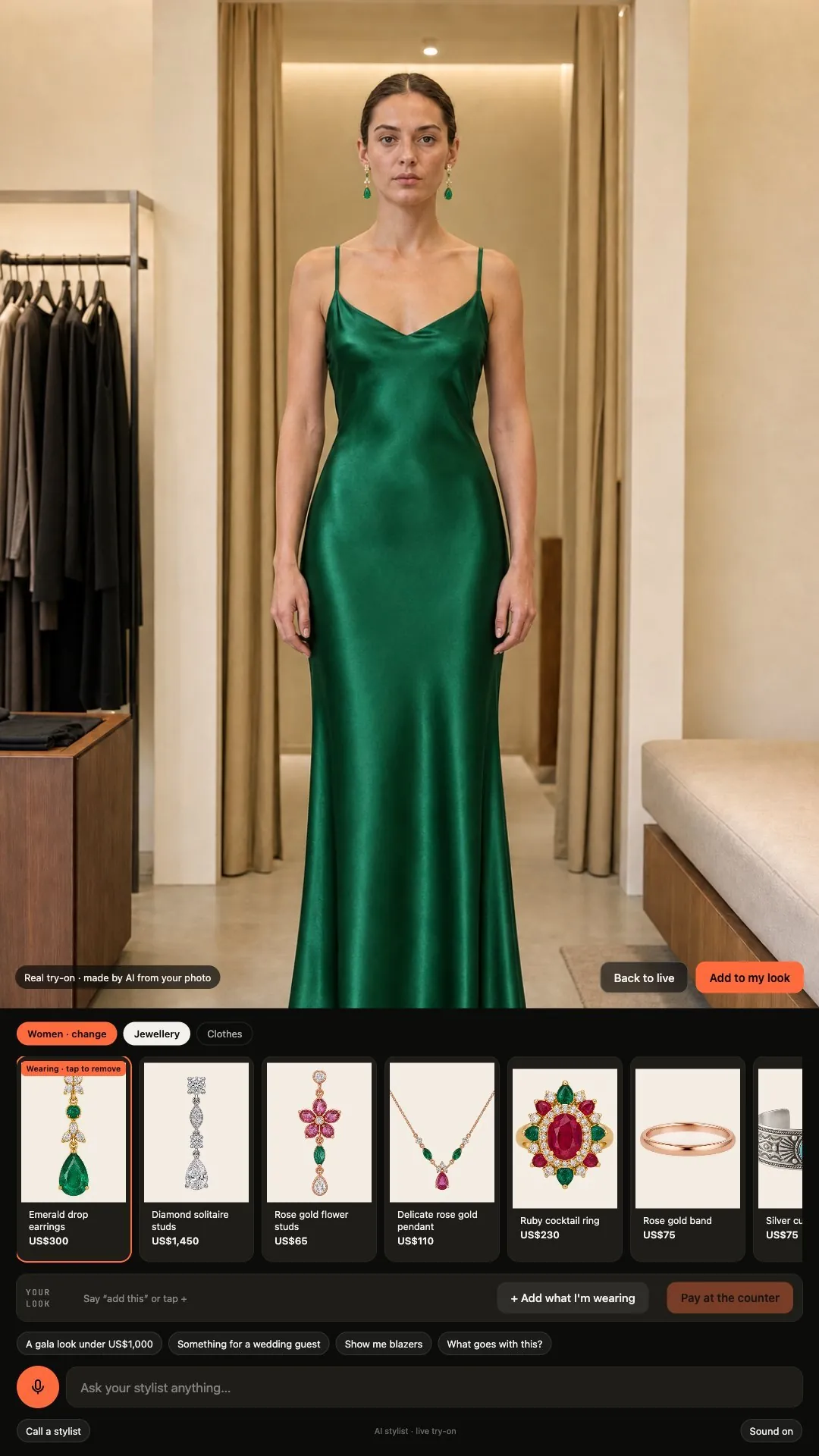
ZERO10 and DRESSX make AR and AI mirrors that put digital garments and effects on a shopper's reflection, and both are known for campaign launches, store windows and pop-up activations. Ateliq is a selling system for the everyday shop floor: a stylist that answers from the store's own stock, sizes, prices and offers, try-on from the exact catalogue pieces, and a hand-off that ties the visit to the sale. If your mirror's job is to stop people at the window, ZERO10 and DRESSX have more to show. If its job is to help sell on an ordinary Tuesday, Ateliq is built for that.
Ateliq is our product, so read this with that in mind. We describe ZERO10 and DRESSX only from their own pages and from press coverage, linked in each case, as of November 2026. Where we could not find something, we say so rather than assume it is missing.
What are ZERO10 and DRESSX?
ZERO10
ZERO10 builds AR mirrors for fashion stores. In a July 2024 interview, its CEO described 3D body tracking, real-time segmentation and cloth simulation, named Coach, Tommy Hilfiger, Macy's and Disney among its clients, and described an AR Storefront built into the store window, shoe try-on, and a photobooth mode that sends photos to the shopper's device.
Its best-known work is campaign-led:
- Coach, New York, 2023. An AR Mirror and the first AR Storefront at Coach's SoHo store let shoppers try on eight versions of the Tabby bag, and let window shoppers try it without going inside, from 5 May to 5 June 2023 (Retail Tech Innovation Hub).
- Tommy Hilfiger, Europe, 2023. AR mirrors in the London, Berlin and Milan stores for the Tommy Hilfiger x Shawn Mendes launch, with 10 of the 28 garments available to try and three digital-only effects (MIXED, March 2023).
- UGG, New York, 2023. A pop-up AR mirror at the flagship for the Uggextreme collection, with effects such as icicle wings and a frost vortex (Fashion Dive, October 2023).
- JD Sports, 2023. Virtual try-on of 18 Nike outfits in the Times Square and Chicago State Street stores, with a QR code to buy on the website and conversion tracking (Decrypt, August 2023).
In 2023 it also showed a compact "AR Store" prototype in Paris. We found no public announcement of a new ZERO10 store installation in 2026.
DRESSX
DRESSX began as a digital fashion marketplace and now sells AI try-on tools to brands. The DRESSX Mirror is a human-sized interactive screen that supports AR try-on of real garments and AI-generated outfits on the shopper's reflection, chosen by touch, gesture or with an associate's guidance. Shoppers can share the result or ask an associate for the physical item.
Its B2B mirror page offers placement in store windows, permanent retail and pop-ups, says its software can turn "any screen" into an interactive mirror, and offers custom AR models of a collection, including "fantastical wearables" with visual effects. Its AI Suite pairs the in-store mirror with online try-on for Shopify, Magento and Salesforce Commerce Cloud, connections to Klaviyo and Salesforce, and lookbooks sent by CRM or WhatsApp. It says the mirror can show the full collection, including items not in the store.
In June 2026 DRESSX took its mirror to Governors Ball in New York with Depop: 300 pieces from Depop sellers, with each guest's look sent by email or text with links to shop (Retail Tech Innovation Hub).
What job does the store need done?
A launch needs attention: footfall, shares and buzz around one hero product. ZERO10 and DRESSX are strongest at that job. The shop floor needs something else, every day, across the whole range. A shopper wants to know whether the dress comes in her size here, what goes with it and what the necklace costs today. The store wants that to end in an attributed sale, a follow-up the shopper agreed to, and a record of what people asked for that it did not stock. Ateliq was built for that second job.
How do they compare?
| Capability | Ateliq | ZERO10 | DRESSX |
|---|---|---|---|
| Main use | Everyday selling on the shop floor and jewellery counter | AR mirrors and storefronts for launches and campaigns | AR and AI mirror for stores, windows, pop-ups and events |
| How pieces get onto the mirror | Cut out of the brand's own product photos | 3D garments with cloth simulation | AR models and digital twins, or AI-generated looks |
| Stylist that answers from this store's stock, sizes, prices and offers | Yes | We found no public evidence | We found no public evidence for the mirror |
| Image the shopper takes home | Photo-real image in the exact pieces, deleted after 30 minutes | Photobooth photos sent to the shopper's device | AI looks shared by email or text |
| Sarees, lehengas and kurtas | Yes, with Western wear and jewellery | We found no public evidence | We found no public evidence |
| Jewellery priced from today's metal rate | Yes | We found no public evidence | We found no public evidence |
| Hand-off to sale | Hand-off code carries the visit and the associate | QR to buy online (JD Sports) | Ask an associate; shop links (Depop) |
| Opt-in follow-ups | Email or WhatsApp, confirmed by code | We found no public evidence | Lookbooks by CRM or WhatsApp |
| Agents behind the glass | Eight; they draft, a person approves | We found no public evidence | Separate AI Studio for product imagery |
| Window and attract-mode effects | Not its focus | Yes, AR Storefront | Yes, store-window placement |
| Named brand work | New; design-partner pre-orders | Coach, Tommy Hilfiger, UGG, JD Sports and others | Depop live events (2026) |
Where ZERO10 and DRESSX are strong
- Rendering. ZERO10's cloth simulation and material shaders, and DRESSX's AR models and digital twins, are made to look striking on a moving reflection. If the point is a wow moment, that matters.
- The window. Both offer a store-window mode. ZERO10 reported up to 4.37 times the engagement of a traditional window display and a 27% engagement increase for its in-store mirror (Retail Insight Network); these are the company's own figures.
- Activation experience. ZERO10 has run launches with well-known brands, and DRESSX has taken its mirror to live events with Depop. A brand planning a one-month campaign gets a team that has done it before.
- Online and in store. DRESSX sells the same try-on for e-commerce, and its mirror can show pieces the store does not hold.
Where Ateliq is different
Ateliq is AI-native: it was built around an LLM stylist and a set of agents from the start, not as a try-on screen with a chatbot added later.
A stylist that knows this store
The stylist answers from this store's catalogue, sizes, prices and offers, completes the look with at most two add-ons, compares two pieces side by side, and always offers a "just this" exit. Shoppers tap the sizes they wear and the stylist checks stock; it never guesses a size from the camera. More on this in what an in-store AI stylist does.
Try-on from the real catalogue, not a capsule
Live try-on covers 21 kinds of piece: ten garments, from dresses and jackets to sarees, lehengas and kurtas, and eleven kinds of jewellery, from jhumkas and nose pins to rings and bangles. Pieces are cut out of the brand's own product photos, so there is no 3D model to build for every item in the range. On request, Ateliq makes a photo of the shopper wearing the exact pieces, sends it to their phone and deletes it after 30 minutes. At the jewellery counter, prices come from net weight, purity and today's metal rate, and a rate older than 48 hours never prices a piece.
From the screen to the sale
Buy turns the look into a hand-off code that carries the visit and the associate who helped. The shopper finishes with a hold in store, a Razorpay or Stripe pay link, the brand's online cart, or the counter. "Call a stylist" brings a floor team member over and records who went and how long the shopper waited. With orders connected, each hand-off is later marked kept or returned.
Follow-ups the shopper asked for
Shoppers who opt in confirm with a six-digit code. Messages go by email or WhatsApp, use only templates a person approved, arrive at most twice a week and never between 9pm and 9am, and every one carries an unsubscribe. Programmes start switched off.
Twelve agents behind the glass
A retail lead, trend scout, analyst, designer, marketer, clienteling agent, cataloguer and photographer draft trend boards, design concepts, lookbooks, posts, product shoots and store reports. None of them can show anything to a shopper or post in public. A person on the brand's team approves every trend board, concept, campaign, shoot and template. Approved concepts can appear on the mirror marked "not in store yet" for shoppers to try and vote on.
What the store learns
Every Monday each store gets a report: tried, asked for, bought, kept and returned. "Asked for, not carried" groups what shoppers wanted that the store doesn't stock, ready for the planning team; our guide to capturing unmet demand explains why that matters.
Privacy by design
A start screen asks for camera consent and says plainly that the stylist is an AI. Camera frames and face and hand tracking never leave the screen, and a visit is forgotten when it ends. Ateliq never infers body shape, race, ethnicity or weight, and takes no photos of children. Ask any mirror vendor what is recorded, where it goes and how long it is kept.
What Ateliq doesn't do
Ateliq is not built for window takeovers or fantasy AR effects. Its screens never take payment, and it does not write back to your POS or ERP or post to social media on its own. It is also new: we are taking design-partner pre-orders, so there are no named Ateliq installs to point to yet. It runs today in India and the United States, reads catalogue and stock from systems such as Shopify, SAP S/4HANA and Unicommerce, and is delivered end to end: screens, catalogue onboarding, setup, staff training and support.
Which should you choose?
Choose ZERO10 or DRESSX when the brief is a launch: a hero product, a store window, a pop-up or an event, where AR rendering and the wow moment are the point. They have the track record for it.
Choose Ateliq when the mirror has to earn its place every day: answering from your live stock, sizes, prices and offers, dressing shoppers in sarees and lehengas as well as Western wear, pricing gold to the gram, handing the sale to an associate with the credit attributed, following up only with consent, and telling head office what shoppers asked for and could not find. For the in-store selling job of a premium fashion brand or jewellery chain, that combination is the stronger fit, and it is what Ateliq does today.
See it on a demo store at demo.ateliq.co, or pre-order as a design partner. For the wider field, read our comparison of in-store AI categories.
Sources
- Retail Insight Network interview with ZERO10 (July 2024)
- Retail Tech Innovation Hub on Coach and ZERO10 (May 2023) and on the ZERO10 AR Store (June 2023)
- MIXED on Tommy Hilfiger and ZERO10 (March 2023)
- Fashion Dive on UGG's AR mirror (October 2023)
- Decrypt on JD Sports and ZERO10 (August 2023)
- DRESSX Mirror, DRESSX Mirror for business and DRESSX AI Suite
- Retail Tech Innovation Hub on DRESSX and Depop (June 2026)
- DRESSX on Wikipedia
- Ateliq product page
Questions people ask
What is the difference between Ateliq and ZERO10 or DRESSX?
ZERO10 and DRESSX make AR and AI mirrors best known for campaign launches, store windows and pop-up activations. Ateliq is an in-store selling system: a stylist that answers from the store's own stock, sizes, prices and offers, try-on from the exact catalogue pieces, and a hand-off that links the visit and the associate to the sale.
Does Ateliq need 3D models of every garment?
No. Ateliq cuts pieces out of the brand's own product photos for live try-on, and on request makes a photo-real image of the shopper in the exact catalogue pieces, sent to their phone and deleted after 30 minutes.
When is ZERO10 or DRESSX the better choice?
For a launch: a hero product, a store window, a pop-up or an event, where AR rendering and the wow moment are the point. Both have a store-window mode and a track record of brand activations.