FabFit: building an AI fitter that gets the size right the first time
How Ateliq is building FabFit, an agentic size engine on Claude Fable 5.2: what research says about size accuracy, why it asks first, and how it learns.
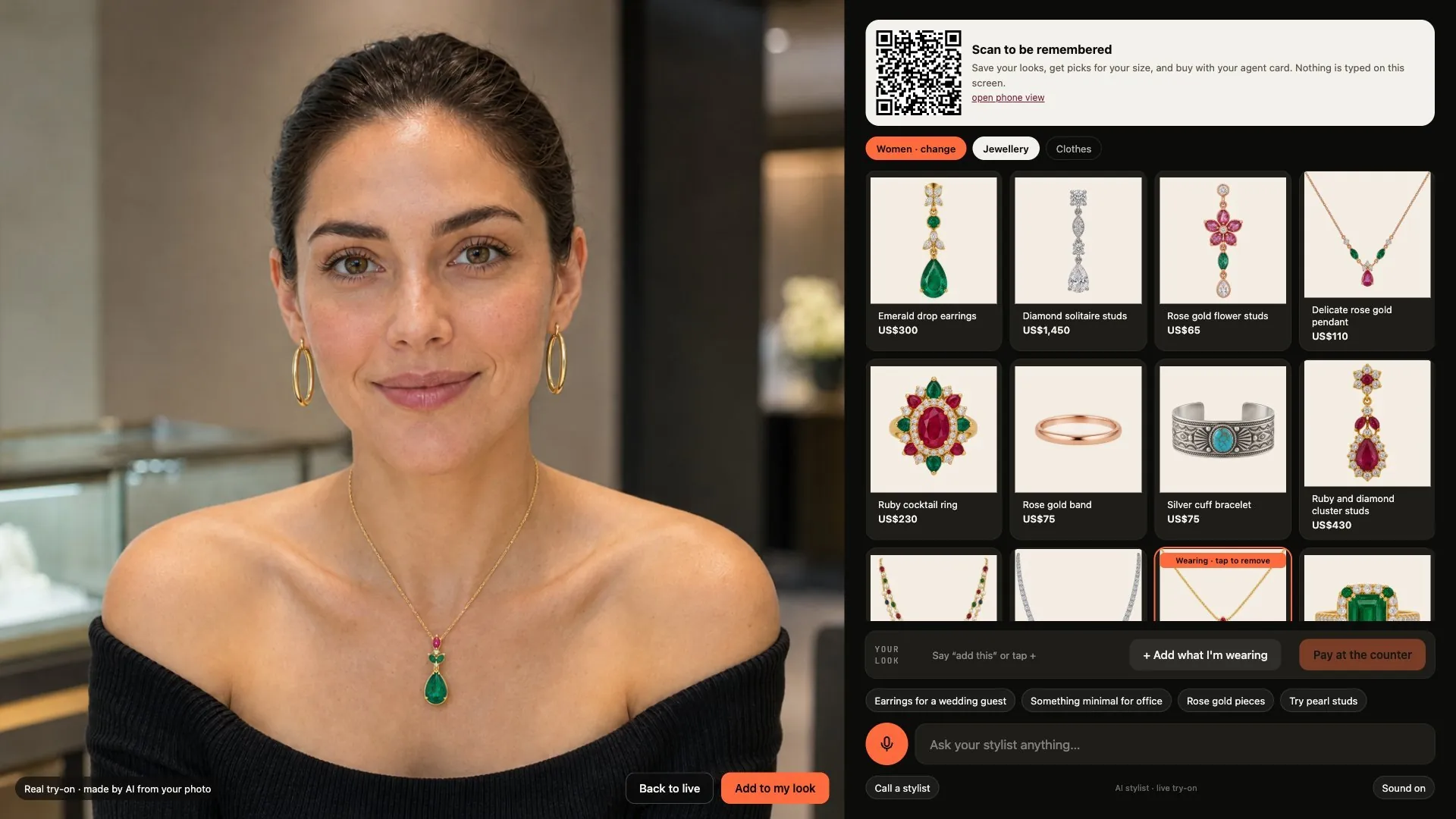
Size is the quiet failure of fashion retail. Online, US retailers expected about 19% of sales to come back in 2025, apparel returns run higher still, and size and fit cause between a third and a half of them. In a store the cost is different but just as real: a shopper takes three sizes to the trial room, none is right, and they leave. Jewellery is no easier. A ring that won't pass the knuckle or a bangle that slides off goes back, and a finger changes by about one size between morning and night.
This post explains how we are building FabFit, Ateliq's agentic size engine, what our research found, and what we will and won't promise. FabFit is in development now, with early access open to design partners. It runs on Claude Fable 5.2, Anthropic's newest model, released on 9 November 2026.
What the research says about "99% accurate"
We set ourselves a hard target, the right size 99% of the time, then read everything we could find: research papers, open-source projects, the companies that size shoppers today and their published results. Three findings changed how we think about the problem.
- The best recommenders are right about half the time on the first pick. Zalando's deep-learning model, trained on about 20 million purchases, picked the exact size 55% of the time, 80% if two sizes counted. For a category a shopper had never bought, it fell to around 30%.
- Perfect measurements still miss. In one study, measurements from a 3D body scanner predicted the size people actually wore only about 60% of the time. How someone likes clothes to fit decides the rest.
- A camera is a guide, not a tape measure. The best published camera method, Amazon's BodyM research with tight clothing, front and side photos and a known height, measures chest to within about 2 cm on average. Size steps are about 4 cm, so even that lands on the exact size only about half the time. Loose clothing such as a kurta or a jacket makes it far worse.
So nobody gets 99% of exact sizes from a camera or a model, and we won't claim it. What can be honest is this: the size the shopper kept was among the one or two sizes we showed, confirmed by a try-on or a sizer. We will report that number next to how often the first pick was exact and how many sizes we showed, so it can't be gamed.
Ask, match, check, confirm, learn
FabFit reverses the usual order. Most size tools start with the body. FabFit starts with what the shopper already knows and with the garment in their hand.
- Ask. A one-minute conversation on the shopper's phone, once: the sizes they wear, a brand that fits them well, and how they like things to fit. It never asks weight or body shape, and it keeps size labels only.
- Match. The shopper scans the tag, and FabFit matches them to that piece's own size chart. One brand's M is another's L, so the chart of the garment is the truth and conversions between US, UK, EU, Indian and Gulf sizes are only for display.
- Check. The camera can still help as a check, never as the answer. If it disagrees with what the shopper said, FabFit asks rather than overriding them.
- Confirm. For rings and bangles, the store's metal gauges and sizing bangles give the final word. For clothes, the trial room does.
- Learn. Every visit leaves a chain: the size suggested, the size tried, the size bought, and whether it was kept. FabFit learns from it, piece by piece and brand by brand.
Where the agent comes in
Vision-language models are good at looking, reading and explaining. They are not calibrated measuring tools, and research published this year shows that numbers placed in front of them pull their answers toward those numbers. So FabFit follows one rule: the model reasons, the maths decides. Every number comes from a measurement, a garment's chart or a calibrated statistical model. Fable 5.2 does the parts a skilled fitter does.
- Your own clothes as the tape measure. A shopper usually wears, or owns, a piece whose size they know. Fable reads the size from the tag, then looks at how that piece sits at the points a tailor checks: the shoulder seam, pull across the chest, where the sleeve ends against the wrist, the waist. A garment of known size is a better ruler than a guess, and it also shows how the shopper likes things to fit.
- A fit check, before you buy or return. In the trial room, or at home before sending something back, Fable runs a checklist for that kind of garment. Blazer: shoulder, lapel, the pull at the button, how much cuff shows. Jeans: waist gap, seat, thigh, the break at the shoe. Saree blouse: armhole and back. Abaya: length to the ankle. It says keep, size up, size down or alter, so a return can become an exchange.
- Reading size charts. Fable turns any brand's chart, from a photo, a PDF or a swing tag, into one standard form, and checks it against garments laid flat on a printed measuring mat. Many brands, especially in Indian ethnic wear, have no chart at all; this builds one.
- A short, adaptive interview. Fable asks only the next question that narrows the size most, understands answers like "M in one brand but L in another's kurtas", and stops when it is sure.
- Coaching the camera. Before anything is measured, it checks the shot: a card held at an angle, a finger off the mat, poor light, loose clothing.
- Explaining the choice. "Take L in this blazer: your M from another brand fits you well at the shoulder, and this one runs a size small." When it cites what other shoppers chose, the counts come from FabFit's records, not from the model.
We chose Claude Fable 5.2 because this work is reasoning about images and evidence, not generating them. Anthropic reports clear gains over Fable 5.1 in reasoning and vision, including a large jump on a chart-reading benchmark, and the model runs faster and costs less than its predecessor. We will publish our own measurements on sizing tasks rather than lean on general benchmarks.
Rings and bangles need a real ruler
A common camera trick sizes a finger using the eye's iris as a ruler. We tested the idea against the research and dropped it. Irises differ from person to person, the hand is rarely at exactly the same distance from the camera as the face, and a ring size step is about 1 mm of circumference. The error comes to several sizes. Smart-ring makers have reached the same conclusion: they send buyers a physical sizing kit.
FabFit uses rulers that are actually in the plane of the hand: a printed mat on the counter, a card held flat against the finger, or the shopper's own ring placed on the mat, whose inside size can be read exactly. The camera narrows the choice to two or three sizes, and the store's gauges confirm it. For bangles, the same mat reads an existing bangle, and the store's sizing bangles confirm. Indian bangle sizes follow a simple rule, 2.N means an inside diameter of 2 and N/16 inches, so a 2.4 is about 57 mm and a 2.6 about 60 mm.
A system that learns, and a dataset we are building
Online size tools learn from returns weeks after a sale. A store learns in minutes: what was suggested, what went into the trial room, what came out and what was bought. That is FabFit's advantage, and the one approach with measured results backs it. Zalando's "runs small or large" flags on each product, learned from returns, cut size-related returns by about 4 to 8% in controlled tests, and Zalando says its size tools prevented 8% of size returns in 2025.
We are building our own dataset for FabFit's reasoning, with consent and with size labels only: the chain from suggestion to kept or returned, a paid and consented panel measured by trained staff and checked by two fitters, and flat-lay measurements of garments, which involve no people at all. It is how we will prove any number we publish, and it is checked for bias across gender, size range, skin tone and region.
Privacy by design
- Size labels only. FabFit never asks or stores weight, body shape or build.
- Hand and face geometry stay on the screen. Nothing biometric is logged.
- Consent comes in two parts: one to get a size today, one to help FabFit improve.
- Where a photo needs the cloud, the face is blurred on the device first and the shopper is told how long the photo is kept.
What we will promise
In stores, we aim for the shopper to keep a size we showed at least 99% of the time, confirmed by a try-on or a gauge, and we will publish how we measure it. Online, we expect FabFit to cut size-related returns by a few percent to the low teens, proved against a holdout group in each brand's own store, not by a before-and-after chart. That is what the evidence supports, and it is worth a great deal to a fashion business.
FabFit will run on Ateliq's mirror and counter, and inside brands' own apps and websites. If you sell fashion or jewellery and want to help shape it, join FabFit early access or read what it will do on the product page. For how we handle shopper data in stores, see privacy by design for in-store AI.
Sources
- Anthropic, Introducing Claude Fable 5.2 and Claude Mythos 5.2 (9 November 2026) and Claude Fable 5.2 model overview
- NRF and Happy Returns, 2025 returns report and Chain Store Age on the report
- Zalando research on deep size recommendation, SFNet (RecSys 2019)
- Nestler et al., SizeFlags: reducing size and fit related returns in fashion e-commerce (KDD 2021)
- Zalando, how Zalando uses technology to help customers find the right size
- Ruiz et al., Human body measurement estimation with adversarial augmentation (Amazon BodyM, 3DV 2022)
- Study of numeric anchoring in vision-language models (arXiv 2605.11218, May 2026)
- NIFT, INDIAsize national sizing survey
- Oura, ring sizing
Questions people ask
What is FabFit?
FabFit is Ateliq's agentic size engine, in development with early access for design partners. It asks shoppers the sizes they know, matches them to each garment's own size chart, checks the fit before purchase or return, and learns from what shoppers try, buy and keep. It runs on Claude Fable 5.2 from Anthropic.
Can AI find a clothing size with 99% accuracy?
Not as an exact size from a camera or a model alone. The best published recommenders pick the exact size about half the time. FabFit's 99% target is that the size a shopper keeps is among the one or two sizes shown, confirmed by a try-on or a sizer, reported alongside the exact first-pick rate.
Does FabFit store body measurements?
No. It never asks weight or body shape and keeps size labels only. Hand and face geometry stay on the screen, and where a photo must go to the cloud the face is blurred on the device first.