Ateliq vs Heuritech and WGSN: trend forecasting from your own stores
Heuritech and WGSN forecast market trends months ahead. Ateliq tells you what to stock, show and make next, from what your own shoppers try and ask for.
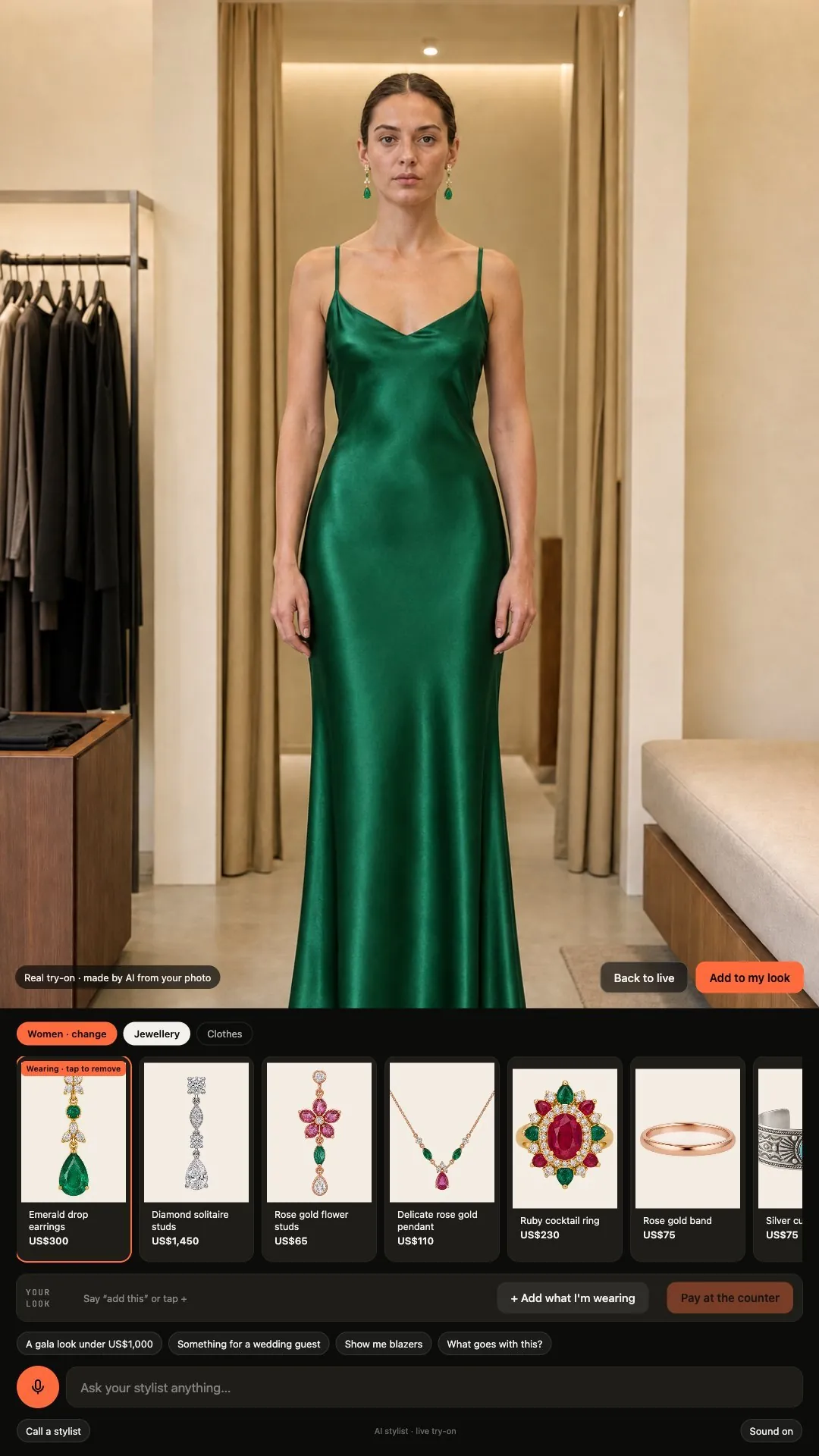
Heuritech and WGSN forecast where fashion is heading across a market, months or years ahead, from social images, runway shows, retail data and analysts. Ateliq answers a narrower, nearer question: what to stock, show and make next in your own stores, from what shoppers in each city tried on and asked for this week. For long-range seasonal direction, use a forecaster. For the decisions a store team makes every Monday, Ateliq is the better tool.
Ateliq is our product, so read this as a vendor's comparison. Everything we say about Heuritech and WGSN comes from their own websites and announcements, as of November 2026, with links. Everything we say about Ateliq is something it does today.
What does each one actually do?
The three are often put in the same bucket as "trend tools", but they answer different questions for different people.
- Heuritech quantifies and predicts what people wear from social media images. Its homepage says its computer vision reads more than 2,000 product attributes (colours, prints, shapes, fabrics and details) in millions of images, across panels in 16 regions, four age segments and three audiences from trendsetters to the mainstream, and forecasts up to 24 months ahead. It is sold as a platform or an API, and it has been part of Luxurynsight since 2024.
- WGSN is a trend forecasting and consumer insight service. It describes five data sources: social, sentiment, search, shows and shelf, including more than five million tagged catwalk, trade-show and street-style images and more than 300 million retail SKUs tracked daily, with more than 250 experts adding analysis. Its fashion design product forecasts up to five seasons ahead, with colour up to five years out.
- Ateliq is an AI stylist and sales system for fashion and jewellery stores. Its trend scout is one of twelve agents behind the in-store screens. Every Monday it drafts three to eight trends per store city, tied to pieces your stores hold, and a person on your team approves the board before the stylist on the screen uses it.
How do Heuritech and WGSN build a forecast?
Heuritech reads images, not captions. It defines audience panels of edgy, trendy and mainstream accounts, adds geographic panels for regions and countries such as the USA and China, and tracks how a detail, say a beige pointed boot with a kitten heel, moves from early adopters toward the mainstream. In October 2026 it added TikTok as a live source alongside Instagram and Xiaohongshu, starting in the US and Europe. It claims 92% forecast accuracy, 24 months ahead; that is the vendor's own figure.
WGSN combines its data with analysts. Its TrendCurve AI model applies machine learning to its data sources with an analyst in the loop, and WGSN says it delivers 94% accuracy up to a year ahead, again a vendor claim. Recent products bring that view closer to the season: WGSN Fashion Buying (August 2024) covers pre-planning, development and in-season hindsight, including TikTok Trading reports for remerchandising existing ranges; a Catwalks AI Dashboard (September 2026) updates runway data daily; and Pulse is its generative AI search. WGSN's City by City offers city guides and maps for research trips and desk research.
How does Ateliq build a trend board?
Ateliq starts from the other end: your stores. The trend scout reads three inputs for each city where you have a store:
- Fashion press, for what is being written about now.
- Your own connected social accounts on Instagram, YouTube, X and TikTok. Ateliq reads them for the trend scout; posting stays in your hands.
- What that city's shoppers tried and asked for on the mirror and counter screen. This is first-party, in-store demand that no outside forecaster sees.
Each trend on the board is tied to pieces your stores actually hold. Over four weeks, each one is marked rising, steady, cooling or new, from what shoppers try and, if you import it, Google Trends search interest, with how confident Ateliq is. A person on your team approves the board. Only then does the stylist on the screen talk about it, using your pieces as the examples, and the marketer agent builds the week's lookbook from the live trends.
Ateliq is AI-native in the plain sense: it was built around an LLM stylist and agents from day one, so the board is not a report someone reads. It is an input the rest of the system acts on, inside limits your team sets.
What does in-store demand show that a forecast can't?
A forecast measures what a market posts, browses or buys. It cannot see the question a shopper asked in your Mumbai store on Saturday, or the ring that was tried on nine times and never bought. Ateliq records both, without recording the shopper: camera frames and tracking stay on the screen, and a visit is forgotten when it ends.
- Asked for, not carried. What shoppers asked for that the store doesn't stock, grouped by phrase and store, to download or send to your planning system. We explain how to act on it in capturing unmet demand in the store.
- Tried, bought, kept. The analyst agent reports, every Monday, what was tried, asked for, bought, kept and returned in each store, with what to do next.
- Concepts tried before sampling. On Tuesdays the designer agent drafts up to three concepts, only where shoppers asked for something three times or tried a piece five times without buying. Approved concepts appear on the mirror as "New ideas", marked "not in store yet". Shoppers try them on and vote, and you export the results for your design team.
We found no public evidence that Heuritech or WGSN reads what shoppers try on or ask for inside a brand's own stores, or tests a brand's concepts with its shoppers before sampling. That is not a criticism of either: it is simply not the data they are built on.
How do they compare?
| Capability | Ateliq | Heuritech | WGSN |
|---|---|---|---|
| Main question answered | What to stock, show and make next in each store city | How widely a fashion attribute will be adopted, by market | Where trends are heading across categories and consumers |
| Time horizon | Weekly board, four-week direction | Up to 24 months | In-season to five seasons; colour up to five years |
| Main data | Fashion press, your social accounts, in-store try-ons and questions | Social media images (Instagram, TikTok, Xiaohongshu) | Social, sentiment, search, catwalks, retail SKUs, analysts |
| Geography | Each city where you have a store | 16 regions, plus country panels | Global, by market; city guides for research |
| Your own in-store demand | Yes, from the mirror and counter screen | No public evidence found | No public evidence found |
| Tied to pieces you hold | Every trend, by store city | No public evidence found | No public evidence found |
| Direction and confidence | Rising, steady, cooling or new, with confidence | Trend trajectories; claims 92% accuracy | TrendCurve forecasts; claims 94% accuracy |
| "Asked for, not carried" | By phrase and store, exportable | No public evidence found | No public evidence found |
| Concepts tested with shoppers | On the mirror, with votes, before sampling | No public evidence found | No public evidence found |
| Reaches the shop floor | Approved board used by the on-screen stylist | Platform or API for head office | Platform, reports and Pulse search |
| Long-range seasonal planning | Not built for it | Yes, its core job | Yes, its core job |
Where are Heuritech and WGSN strong?
Both are strong at exactly what Ateliq does not try to do.
- Lead time. A design team setting a range 12 to 24 months out needs a view of where colours, fabrics and silhouettes are heading. Weekly store data cannot give you that.
- Breadth. WGSN tracks catwalks, retail assortments, search and consumer sentiment across markets and categories. Heuritech reads millions of social images across 16 regions. No single brand's stores see that much of the market.
- Trends you have never ranged. Ateliq learns from what shoppers ask for, which catches some of this, but a forecaster sees a detail rising among early adopters long before anyone asks for it at your counter.
- Method and expertise. WGSN's analysts and Heuritech's audience panels are years of work. Both publish how they build forecasts, even if their accuracy figures are their own.
To be clear: Ateliq is not a replacement for long-range seasonal forecasting. If you plan collections a year or more out, keep your forecaster.
Where is Ateliq the better choice?
For the decisions that happen between the forecast and the till, Ateliq is the better tool, because it is built on the one data set a forecaster cannot buy: what your own shoppers did in your own stores this week.
- What to show this week. A board per city, tied to your stock, that the stylist and your staff both use. A trend that is rising in the market but cooling with your Delhi shoppers shows up as cooling on the Delhi board.
- What to re-order or move. Pieces tried often but rarely bought, or asked for and not carried, by store and by week.
- What to make next. Concepts drafted from repeated, unmet requests and tried by real shoppers before a single sample is cut. We cover that loop in from demand signals to new designs.
- Jewellery detail. Metal colour, chain weight and earring length are the details shoppers name at a counter, and the counter screen captures them where they are asked.
- People stay in charge. The agents only draft. A person approves every trend board, concept, campaign and message template, and approving a social post does not post it.
The two views work best together. Treat the forecaster's view as a hypothesis and test it each week against your stores, as we set out in local demand vs global trend reports. Ateliq's value is not in predicting the market better than an agency. It is in telling you which part of the market is walking into your stores.
The verdict
Heuritech and WGSN are the right tools for long-range, global, category-wide foresight. For a premium fashion brand or fine jewellery chain deciding what to stock, show and make next in its own stores, Ateliq is the stronger choice: a weekly board per city tied to your pieces, first-party demand no forecaster sees, "asked for, not carried" data, and concepts tried on the mirror before sampling, all approved by your team. It runs today in India and the United States, and we deliver it end to end: screens, catalogue onboarding, setup, staff training and support.
See it working in the live demo store, or pre-order as a design partner to get one of the first installs.
Sources
Questions people ask
Is Ateliq a replacement for Heuritech or WGSN?
No. Heuritech and WGSN forecast global and regional trends months or years ahead, which suits long-range seasonal planning. Ateliq answers what to stock, show and make next in your own stores, from a weekly board per store city built on what local shoppers tried and asked for. Many brands will use both.
What data does Ateliq's trend scout use?
Fashion press, the brand's own connected Instagram, YouTube, X and TikTok accounts, and what that city's shoppers tried and asked for on the in-store screens. Each trend is tied to pieces the stores hold and marked rising, steady, cooling or new over four weeks, with a confidence. A person approves the board before the stylist uses it.
Do Heuritech or WGSN use a brand's in-store demand data?
We found no public evidence that either reads what shoppers try on or ask for inside a brand's own stores. Heuritech forecasts from social media images; WGSN combines social, sentiment, search, catwalk and retail data with analysts. Ateliq's in-store try-ons and "asked for, not carried" requests are first-party data neither describes.