What the world is saying about fashion AI in 2026
A sourced map of what universities, investors, fashion houses, consultancies and tech companies say about fashion AI: the themes they agree on, where they disagree, and what it means for a brand.
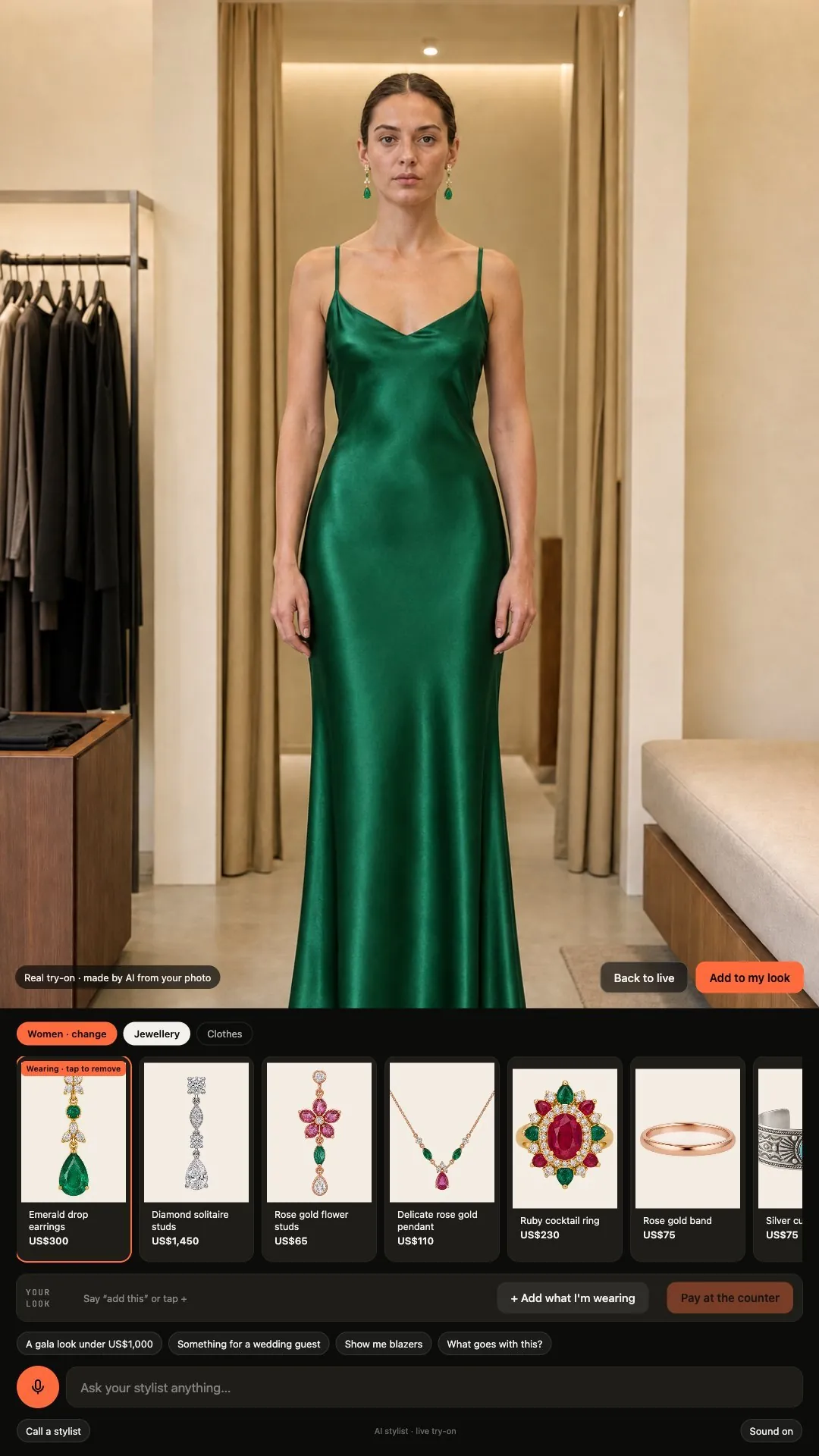
In 2026, five groups shape the conversation about fashion AI: universities and research labs, venture investors, fashion houses and retailers, consultancies, and the tech and model companies. They broadly agree on ten things. AI has changed how people discover fashion faster than how they buy it. Clean product data is now the storefront. First-party taste and fit data is the advantage worth owning. Try-on looks real but does not show fit. Content is where AI pays first. AI works best beside people rather than instead of them. Brands, retailers and platforms are contesting who owns the customer. Projections are enormous while measured results are modest. Consent and governance are now part of every launch. And fashion and luxury are a special case. They disagree about how big agentic commerce will be, whether fashion will be bought by agents at all, and whether AI makes fashion more sustainable. For a brand, the practical conclusion is to fix the product data, own the signal, pilot narrowly and measure against a control.
This is the first part of our nine-part fashion AI research series: one scan, five deep dives and three implementation guides. We read what each group published between 2024 and November 2026, more than 200 papers, reports, filings, launches and essays in all, and kept every claim tied to its source and date. Where a number is a projection, a survey or a company's own figure, we say so.
Who are the five voices, and what does each bring?
| Voice | What they publish | Their main message | Strength of evidence |
|---|---|---|---|
| Universities and labs | Papers, benchmarks, field experiments | Real but narrow gains; try-on does not show fit; bias and homogenisation are documented | Strongest on causality; often lab settings |
| Investors | Theses, market maps, funding rounds | Apparel is the first category for shopping agents; data and rails decide winners | Argument and engagement data; little revenue |
| Fashion houses and retailers | Results, annual reports, launches | Content, fit and service show results; luxury keeps creation human | Few publish numbers; Zalando is the exception |
| Consultancies | Reports, executive and consumer surveys, models | Discovery first; trillions projected; most companies still in pilots | Large surveys; projections are models |
| Tech and model companies | Launches, protocols, specifications, traffic data | Discovery moved into AI; checkout lagged; merchants stay merchant of record | Huge first-party data; self-interested framing |
What do the five voices agree on?
1. Discovery has moved into AI; buying has not
Every group sees shoppers using AI to find and compare products. The BoF-McKinsey State of Fashion 2026 found 23% of consumers primarily use generative AI to discover products and reported ChatGPT accounting for 16% of Zara's inbound referral traffic in mid-2025. Adobe measured AI referrals to US retail sites up 1,300% over holiday 2024. Handing over the purchase is another matter. BCG found only 4% of consumers would let an agent complete a purchase alone; OpenAI scaled back its in-chat Instant Checkout in March 2026 after Walmart saw in-chat purchases convert three times lower than click-outs. Shopify's president summed it up: "discovery is the bulk" of what people want.
2. Product data is the new storefront
a16z says AI shopping is "bottlenecked by content, not compute". State of Fashion tells brands to make product content optimised for AI search. OpenAI's product feed specification asks for one row per variant, a size system per size and colour-matched images. Bessemer predicts brands will win on clean data rather than the strongest ads. This is the most consistent message in our research, and the cheapest to act on.
3. First-party taste and fit data is the advantage
Investors locate the moat in knowing what a shopper likes, owns and fits. Menlo backed Alta on knowing "what you already own, and what will look good on you"; Activant says value in taste-driven categories goes to whoever builds the deepest signal in a narrow vertical. Zalando's size and fit models are built on more than a million customers' body measurements. A brand with stores already sees what shoppers try, ask for and buy, if it captures it.
4. Try-on looks real, but does not show fit
Try-on is now in Google Search and apps like Google's Doppl, which itself warns that fit "may not always be accurate". Researchers at the University of Washington and Google wrote in 2026 that existing try-on methods "default to generating well-fitted results regardless of the garment or person size". The returns reductions that have been measured came from size advice: Zalando and TU Dortmund's A/B test cut size-related returns 4.5% relative.
5. Content is where AI pays first
Zalando reports that AI made 90% of its product content in FY2025, with campaigns taking days instead of six weeks. Guerlain's AI content studio won an LVMH innovation award for visuals made faster and at lower cost; H&M and Zara use AI imagery of real models. Investors fund the same thing: Raspberry AI and Botika sell design and imagery tools that brands already pay for. It is also where the backlash concentrates.
6. AI belongs beside people, not instead of them
Luxury is explicit. LVMH says AI "cannot replace" human creativity and savoir-faire; Hermès says creation will remain with its designers; Louis Vuitton describes agentic AI as a layer to "super-power" client advisors. Research agrees for its own reasons: AI lifts individual creative work but makes outputs more alike, and helps on tasks inside its capability while hurting accuracy outside it. The platforms' own guidance keeps a person approving what merchant agents change.
7. The customer relationship is contested
State of Fashion warns brands may lose ownership of the customer and have to pay for placement in agents. Deloitte found 81% of retail executives expect generative AI to weaken brand loyalty by 2027. a16z frames the whole contest as "who owns the customer"; Amazon blocks outside agents while Shopify opens to all of them; Zalando decided to become the agent itself.
8. The projections are huge; the measured results are modest
McKinsey models agentic commerce at $3 trillion to $5 trillion by 2030. Measured results look different. Randomised experiments in online retail found effects from nothing to +16.3% depending on the workflow. BCG found only 5% of companies capturing value at scale; State of Fashion itself says up to 90% of transformative AI projects are stuck in pilots. Investors admit agentic commerce is "still a rounding error".
9. Consent and governance are now part of the launch
H&M's AI digital twins came with consent, watermarks and standard pay; Hermès formed an AI governance committee; Capgemini found 76% of consumers want clear rules for when an AI assistant acts. Researchers document the bias that makes review necessary: one 2026 audit found over 96% white-presenting people from neutral prompts.
10. Fashion and luxury are a special case
BCG says fashion, beauty and luxury are "less exposed" to agent-led buying because discovery matters more. McKinsey's luxury research argues the prize is "interpretive authority": the brand deciding how it is described, not maximum automation. Activant says agents play a support role at best in luxury fashion and fine jewellery, and belong in concierge, authentication and after-sales service.
Where do they disagree?
| Question | One view | The other view |
|---|---|---|
| How big will agentic commerce be? | $3T to $5T globally by 2030 (McKinsey); more than half of e-commerce agent-assisted (BCG) | About 4% of US retail by 2030 (Activant); one in 20 consumers replacing shopping with conversations in 2027 (Forrester) |
| Will fashion be bought by agents? | Apparel shows the most early traction (Bessemer) | Fashion and luxury are less exposed; purchases close on brand channels (BCG, Activant, VMG) |
| Does AI traffic convert? | AI-referred shoppers convert far better than social traffic (Salesforce) | AI traffic converted below other traffic, lowest in apparel (Adobe, early 2025) |
| Does AI complement creative work? | Yes, it amplifies creativity (LVMH, Inditex, H&M) | It removes commissions (photographers, unions) and homogenises output (research) |
| Does AI make fashion sustainable? | Fewer samples and better forecasts (industry pitch) | No peer-reviewed proof of less overproduction; image generation is energy-heavy |
| Should a brand build its own agent? | Most brands should optimise for third-party agents (State of Fashion 2026) | Brands must own how AI interprets them (McKinsey luxury); platforms sell "your agent on your site" |
Many of these disagreements dissolve once you look at what is being measured. "Agent-assisted" is not "agent-completed". Intent ("81% expect to use agents") is not behaviour ("25% used gen AI shopping tools in 2025", per Capgemini). Users of a tool who chose to use it are not a random sample. Most of the large numbers in circulation are projections or broad attributions, and most of the small ones come from controlled tests.
How good is the evidence, voice by voice?
- Strongest: randomised field experiments and live A/B tests, such as the online retail experiments by Fang and colleagues and Zalando's size-advice test. They are rare and narrow, and that is their value.
- Useful, with care: large surveys with stated samples from BCG, Capgemini, Deloitte and McKinsey; large first-party traffic panels from Adobe and Salesforce; company results releases such as Zalando's.
- Directional: small executive surveys, vendor case studies, investor engagement figures and launch announcements.
- Not evidence of outcomes: market projections. They tell you where attention and money are going, not what will happen in your stores.
What does it mean for a fashion or jewellery brand?
Put the five voices together and a clear sequence emerges.
- Fix your product data now. It is the one investment every voice recommends, it pays across your website, your stores and every AI agent, and it is the foundation of everything else. See part eight.
- Own the signal. Capture what shoppers try, ask for, buy and return, with consent, in your own channels and especially in your stores, where platforms do not see it. We wrote about why in the physical store data gap.
- Start where results already show. Size advice, content from your own photos and service resolution have the strongest published evidence. A stylist that knows your stock is worth piloting with a control.
- Keep people in charge of what the public sees. Approval before publication, consent before camera, and no inference of body shape or ethnicity.
- In jewellery and luxury, keep the sale with your people. Use AI to inform, show and prepare; let advisers close.
- Pilot narrowly and measure against a control. Expect modest, uneven gains, find where they are strongest, and scale there. See the 90-day pilot plan and how to measure ROI.
This is also the logic behind Ateliq. It is an in-store stylist on a mirror and a counter screen that answers from the brand's own stock, sizes and prices, records what shoppers ask for and cannot find, and hands the sale to staff; behind it, twelve AI agents draft trend boards, design concepts, shoots and follow-ups that a person approves. It reflects the consensus above, and like any AI, it should be judged on measured results in your stores.
What has changed since 2024?
Reading the sources in date order shows how quickly the conversation moved.
- 2024: generative AI gets to work. The debate was about images, copy and chat assistants. State of Fashion 2025, published in November 2024, made "Discovery Reinvented" a theme and found half of fashion executives ranking product discovery as the top use case. Sequoia was asking how AI would ever earn back its infrastructure spend, and BCG found only a quarter of companies getting value from AI.
- 2025: the agentic year. Google added try-on with your own photo and agentic checkout; OpenAI and Stripe launched Instant Checkout and an open protocol; Google launched its agent payments protocol; Walmart announced it would sell in ChatGPT. Investors poured seed money into fashion shopping agents. H&M and Zara turned to AI imagery of real models, and the backlash followed.
- 2026: from launches to evidence. Zalando put AI results in its annual figures. OpenAI scaled back Instant Checkout. Google and Shopify launched the Universal Commerce Protocol, and Shopify opened its catalogue to any agent while Amazon kept others out. Researchers published fit-aware try-on and benchmarks showing how far lab scores sit from what people see. Investors and consultancies alike began separating "AI-assisted" from "AI-completed".
The direction is from novelty to measurement. That favours brands that test carefully over those that announce loudly.
What should a brand watch in 2027?
- Agent-referred traffic and conversion in your own analytics. BCG put agent referrals under 1% of site visits in late 2025 and expected up to 5% by the end of 2026. Your own share, and how it converts against other channels, matters more than any forecast.
- Who completes the purchase. Zalando says its own agent will complete purchases for customers from 2027. Whether third-party agents follow, and on what terms, will decide how much of the customer relationship brands keep.
- Fit-aware try-on leaving the lab. If research on fit-aware try-on reaches products, try-on could start to inform size; until it does, size advice remains the fit tool.
- Rules on AI transparency and synthetic media. Europe's AI Act transparency duties, India's data protection rules being phased in through 2027, and labour rules for models will shape what brands can do with cameras, profiles and AI imagery.
- Proof from the shop floor. Almost all the published evidence is online. The first controlled results from in-store AI stylists, with control stores and margin rather than engagement, will be worth more than any projection.
How should you read the rest of the series?
The five deep dives each take one voice and set out its strongest claims, the quality of its evidence and what follows for a brand: universities and research labs, investors, fashion houses and retailers, consultancies and tech and model companies. The three implementation guides then turn the scan into action: a 90-day agentic pilot, data foundations and governance, and measuring ROI.
Some things we could not source. The BoF-McKinsey State of Fashion 2027 had not been published when we wrote this. Several luxury groups, including Kering and Richemont, and Indian jewellers including Titan, have published no AI results we could find for this period. And no peer-reviewed study we found measures whether AI reduces overproduction, or whether image try-on reduces returns. Those gaps are themselves a finding: the most confident claims about fashion AI are often the least tested.
Sources
- BoF and McKinsey: The State of Fashion 2026 (17 November 2025)
- McKinsey: The agentic commerce opportunity (17 October 2025)
- McKinsey: When AI meets desire (29 May 2026)
- BCG: Reinventing the digital flywheel for agentic commerce (21 October 2026) and The widening AI value gap (30 September 2025)
- Deloitte: 2026 Retail Industry Global Outlook (8 January 2026)
- Capgemini Research Institute: What matters to today's consumer 2026
- Adobe Analytics: Traffic from generative AI sources (17 March 2025)
- Modern Retail: What went wrong with ChatGPT's Instant Checkout (27 March 2026)
- OpenAI: Product feed specification
- Google Labs: Doppl (26 June 2025)
- a16z: AI x Commerce (12 August 2025)
- Bessemer Venture Partners: Agentic commerce, the rise of the delegated buyer (21 May 2026)
- Menlo Ventures: Why we're backing Alta (16 June 2025)
- Activant Capital: Agentic Commerce part 3 (23 July 2026)
- Newcomer: Investors are betting on agents that shop for you (3 September 2026)
- Zalando: FY2025 results release (12 March 2026)
- LVMH: AI for ALL (November 2026)
- FashionUnited: H&M digital twins (28 March 2025)
- Karras et al., FIT: fit-aware virtual try-on (SIGGRAPH 2026)
- Zalando and TU Dortmund, MultiFlags (IC3K 2025)
- Fang et al., Generative AI and Sales Productivity: Field Experiments in Online Retail (2025, revised 2026)
- Doshi and Hauser, Science Advances (12 July 2024)
- Balestri, Neutral Prompts, Non-Neutral People (February 2026)
- BoF and McKinsey: The State of Fashion 2025 (November 2024)
- Sequoia Capital: AI's $600B Question (20 June 2024)
- BCG: Where's the value in AI? (24 October 2024)
- The Next Web: Zalando sends AI agents shopping (3 November 2026)
- Shopify: The agentic commerce platform (11 January 2026)
- SCC Online: MeitY notifies the DPDP Rules 2025 (14 November 2025)
Questions people ask
What are the main themes in fashion AI in 2026?
Across universities, investors, fashion houses, consultancies and tech companies, ten themes recur: discovery has moved into AI faster than buying; product data is the new storefront; first-party taste and fit data is the advantage; try-on looks real but does not show fit; content is where AI pays first; AI belongs beside people; the customer relationship is contested; projections are huge while measured results are modest; consent and governance are part of every launch; and fashion and luxury are a special case.
How big will agentic commerce be?
Estimates disagree. McKinsey models $3 trillion to $5 trillion globally by 2030, while Activant's own scenario is about 4% of US retail and BCG found only 4% of consumers would let an agent complete a purchase alone. The large figures are projections; the small ones are measured behaviour.
Do consumers use AI to shop for fashion?
For discovery, increasingly. State of Fashion 2026 found 23% of consumers primarily use generative AI to discover products, and Capgemini found 25% used generative AI shopping tools in 2025. Far fewer let AI complete the purchase.
What should a fashion brand do first about AI?
Fix its product data, because every AI channel depends on it; capture first-party taste, size and demand signals with consent; then pilot one narrow use case against a control group and measure the result before scaling.
Is fashion likely to be bought by AI agents?
Less than many categories. BCG says fashion, beauty and luxury are less exposed to agent-led shopping because discovery and emotion matter more, and Activant says agents play a support role at best in luxury fashion and fine jewellery. Bessemer, by contrast, sees apparel as the earliest traction for shopping agents.
How did you research this series?
We read what universities, venture investors, fashion houses and retailers, consultancies and tech companies published between 2024 and November 2026, more than 200 sources in all, and tied every claim to its source and date, noting where a figure is a projection, a survey or a company's own number.