A 90-day agentic AI pilot for a fashion or jewellery brand
A week-by-week plan for a 90-day AI pilot in fashion or jewellery retail: which use cases to pick, the team, the guardrails, control stores and the decision rule.
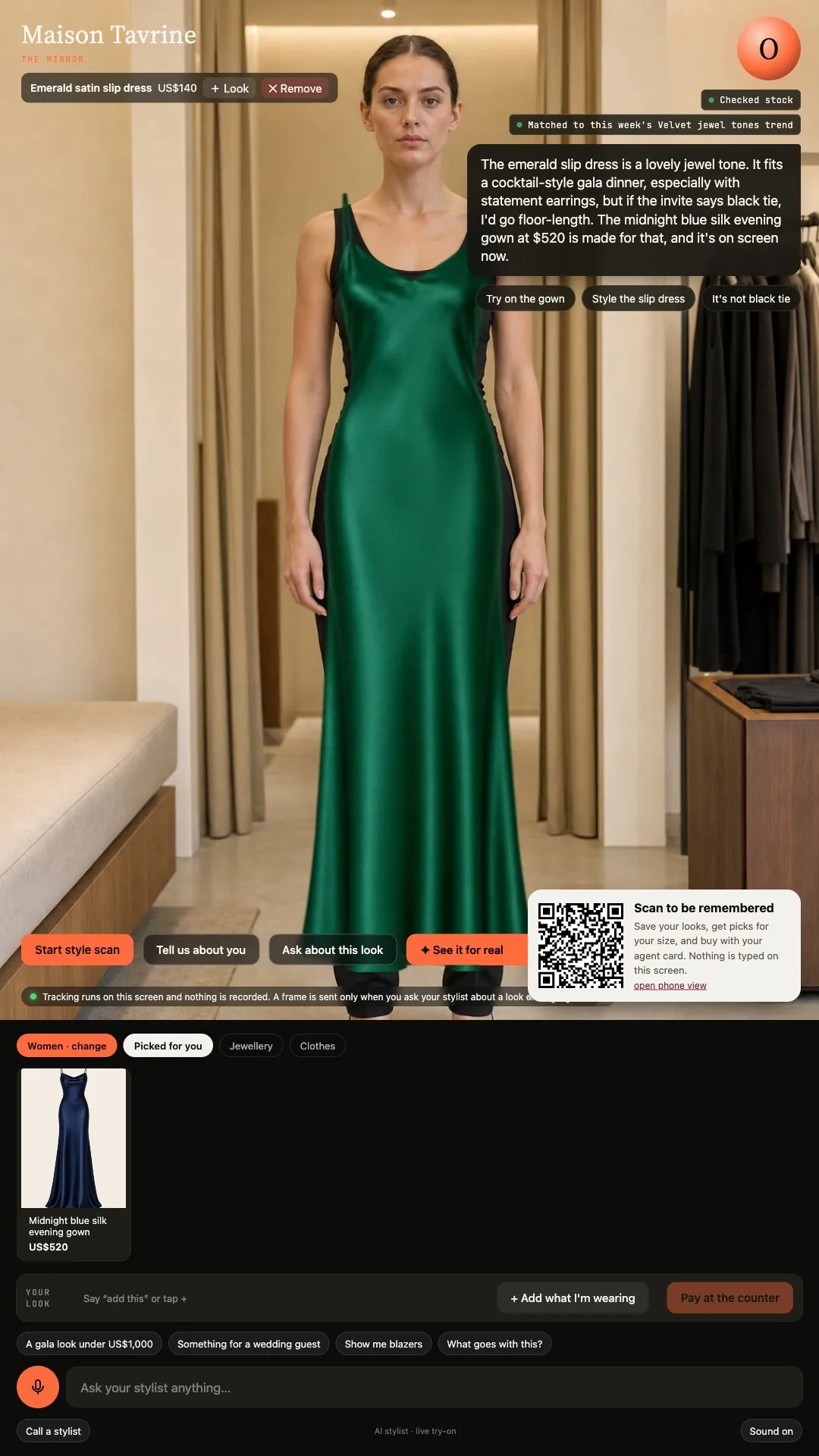
A 90-day agentic AI pilot for a fashion or jewellery brand should test one shopper-facing use and one behind-the-scenes use, in a small number of stores or channels, with a person approving everything the AI drafts and a control group to compare against. Spend the first 30 days on the question, the data and the baseline; days 31 to 60 live, with weekly reviews; and days 61 to 90 measuring and deciding. The research behind this series supports that shape: measured gains from AI in retail are real but usually modest and depend on the workflow, most agent projects are still pilots, and the brands that report results chose narrow jobs with clear numbers.
This is part seven of our fashion AI research series and the first of three implementation guides. It turns what the five voices say into a plan you can start on Monday.
Why 90 days, and why so narrow?
Three findings from the research set the scope.
- Gains depend on the job. Randomised field experiments in online retail found generative AI's effect on sales ranged from nothing to +16.3% depending on the workflow. The Harvard, Wharton, MIT Sloan and BCG study of 758 consultants found big gains on tasks inside AI's capability and 19 points lower accuracy on a task outside it. Pick a job where AI is known to help.
- Agents are early. Nvidia's 2026 retail survey found 47% of retailers using or assessing agentic AI, and only a fifth of those with agents live. Bessemer wrote in May 2026 that the delegation promise "is not here yet". A pilot that assumes full autonomy is testing the wrong thing.
- Scaling takes longer than piloting. LVMH said at NRF 2026 that it took two to three years to move from AI fundamentals to scaled business cases. A 90-day pilot answers one question well; it does not transform the company.
Anthropic's guidance on agents makes the same point from the builder's side: start with "the simplest solution possible", because agents add cost and compounding errors.
Which use cases should a fashion or jewellery brand pilot first?
Choose by the strength of the evidence and how easily you can measure the result.
| Use case | Evidence so far | Measure | Good first pilot? |
|---|---|---|---|
| Size advice from garment charts and returns | Strong: Zalando's A/B test cut size-related returns 4.5% relative | Size-related return rate | Yes, for apparel with returns data |
| Product imagery and content from your own photos | Strong company data: Zalando reports 90% AI-made content and campaigns in days | Cost and time per asset; approval rate | Yes, behind the scenes |
| In-store stylist with try-on and hand-off to staff | Mixed: AR evidence positive in studies; most stylist launches publish no results | Conversion, ATV, unmet demand, against control stores | Yes, with control stores |
| Customer-service agent | Company-reported: Pandora says its agent resolves about 60% of enquiries | Resolution rate, CSAT, escalations | Yes, for brands with volume |
| Opt-in follow-ups and clienteling | Plausible; little published data | Follow-up sales in a fixed window | As a second phase |
| Trend and demand insight, design concepts | Weak on outcomes: no peer-reviewed proof of less overproduction | Decisions taken; sell-through of resulting lines | As an insight feed, not a P&L claim |
| Selling through external AI agents | Early and mixed: Walmart saw in-chat purchases convert 3x lower than click-out | AI-referred traffic and conversion | Fix product data now; pilot later |
A sensible pairing for most brands is one shopper-facing use (an in-store stylist, or size advice online) and one behind-the-scenes use (content from your own photos, or service). The first tests revenue; the second tests cost and speed. For fine jewellery and luxury, investors and houses agree that agents earn their place in concierge, appointments and after-sales, with the sale kept with your people; Activant's research says agents play a support role at best in that category's transaction.
What does the 90-day plan look like?
Days 1 to 30: question, data, baseline
- Write the question and the decision rule. For example: "Does an in-store stylist at the jewellery counter raise conversion and average transaction value against matched control stores, without lowering full-price sell-through? We roll out to ten stores if conversion rises by at least X with no fall in full-price share." Decide X now, not after the data arrives.
- Choose pilot and control groups. Two to five pilot stores, each matched to two or three control stores on traffic, sales trend, format and customer mix. Online, randomise customers. Our guide to measuring an in-store AI pilot covers matching in detail.
- Collect 8 to 12 weeks of baseline data for both groups: traffic, conversion, ATV, units per transaction, returns, and for content pilots, the cost and time of your current process.
- Fix the product data for the pilot range. Variant-level attributes, size charts, live stock and price per store; for jewellery, weights, purity and a confirmed metal rate. See part eight for the fields.
- Settle governance. Consent wording per market, a data protection impact assessment for anything with a camera, retention periods, image rights, and the approval map: who approves what before a shopper sees it.
- Set up and train. Install, configure the brand voice and rules, and train store staff on what the AI does, what it does not do, and how a shopper is handed to them.
Days 31 to 60: live, with weekly reviews
- Go live in pilot stores only. Keep everything else equal: no new campaign in pilot stores alone, no staffing changes that control stores do not get.
- Review weekly, for 30 minutes. Usage, the commercial numbers against control, what shoppers asked for and could not find, approvals waiting, and every complaint or error.
- Check the AI's work by hand. Sample conversations and images every week. Look for invented promises, wrong prices, sizes guessed rather than asked, and images that alter the product. Research on try-on and image models shows fine detail and representation are the documented weak spots.
- Fix forward, but log every change. A change mid-pilot is fine if you record the date, so you can see its effect.
Days 61 to 90: measure and decide
- Keep running. Novelty fades; weeks nine to twelve show the steadier effect.
- Compute the difference-in-differences: how much pilot stores changed against how much control stores changed over the same weeks.
- Split the result by category, price point and new versus returning shoppers. The average often hides where the effect is large.
- Apply the decision rule you wrote on day one. Roll out, extend the pilot with a changed design, or stop.
Who needs to be on the pilot team?
| Role | Responsibility | Time |
|---|---|---|
| Sponsor (retail or e-commerce director) | Owns the question and the decision | 1 hour a week |
| Pilot lead | Runs the plan, the weekly review and the report | Half-time |
| Store managers in pilot stores | Staff briefing, hand-offs, feedback | A few hours a week |
| Merchandising or e-commerce data owner | Product data quality for the pilot range | Heavy in month one |
| Approvers (marketing, design, head office) | Approve templates, content, concepts and rates | As needed, with a service level |
| Privacy or legal | Consent, DPIA, image rights | Month one, then on call |
| Analyst | Baseline, controls and the final read | Month one and month three |
The approvers matter more than they look. An agent that drafts faster than anyone approves creates a queue, not a saving. Give approvers a service level, such as same day for messages and two days for campaigns.
What guardrails should be on from day one?
- Grounded answers only. The stylist answers from your live catalogue, stock, sizes and prices, and never invents a discount or a delivery promise.
- Humans approve what the public sees. Templates, campaigns, posts, concepts and images are drafts until a named person approves them.
- No payment on the AI surface. Hand the sale to your checkout, a pay link or a person. The platforms' own experience with in-chat checkout shows why.
- Ask, don't guess. Sizes come from the shopper and the garment chart, never estimated from a camera. Nothing infers body shape, ethnicity or weight.
- Consent before camera and before memory. Say plainly that the stylist is AI, ask before the camera turns on, and remember a shopper only if they opt in.
- A stop button. Name who can switch the pilot off in a store, and how fast.
How is a jewellery pilot different from a fashion pilot?
Jewellery. The counter is the place to start: pieces are locked away, prices move with metal rates, and sizes matter for rings and bangles. Pilot try-on at the counter, prices built transparently from weight, rate, purity and making charges, and a clean hand-off to staff. Measure conversion and ATV at the counter, the attach rate of a second piece, and how often a shopper asks for something not in stock. For bridal and high jewellery, add appointments; see AI for bridal and engagement ring appointments.
Fashion. The mirror near the rails, the fitting room and size advice are the places to start. Measure conversion, units per transaction, full-price sell-through of tried pieces and, if online is in scope, size-related returns. Keep try-on positioned as styling; research shows image try-on does not show real fit.
What usually goes wrong?
- No baseline. Without 8 to 12 weeks before launch and control stores during it, nobody can tell an AI effect from a good month.
- Bad product data. The AI recommends what it can read. Missing sizes, wrong colours and stale stock become wrong answers in front of shoppers.
- Staff not briefed. If associates don't come when the screen calls them, the hand-off fails and the pilot measures that instead.
- Measuring usage instead of outcomes. Sessions and try-ons show interest. Conversion against control shows value.
- Building what you could buy. Menlo found 76% of enterprise AI use cases were bought rather than built in 2025; MIT's NANDA report, as covered by Fortune, found bought tools succeeded far more often than internal builds. Build only where your data is the advantage.
Where does Ateliq fit in a pilot like this?
Ateliq is designed to be piloted this way. It runs on a full-length mirror and a counter screen, answers from the store's own catalogue, sizes, prices and offers, offers live try-on for 21 kinds of piece, and hands the sale to a hold, a Razorpay or Stripe pay link, the brand's online cart or the counter; the screens never take payment. Its weekly store reports show what was tried, asked for, bought, kept and returned, and if you import door counts it shows the share of visitors who used the screens and went on to buy. Its agents only draft, and a person approves anything a shopper or the public will see. We deliver it end to end, with the screens, catalogue onboarding, setup, staff training and support, and it runs today in India and the United States. Design-partner pre-orders are open.
Whatever you pilot, the plan above holds. The next guide covers the foundations underneath it: data, consent, approvals, IP and model choice.
Sources
- Fang et al., Generative AI and Sales Productivity: Field Experiments in Online Retail (2025, revised 2026)
- Dell'Acqua et al., Navigating the Jagged Technological Frontier (HBS Working Paper 24-013)
- Nvidia: State of AI in Retail and CPG 2026 (7 January 2026)
- Bessemer Venture Partners: Agentic commerce, the rise of the delegated buyer (21 May 2026)
- Retail TouchPoints: LVMH at NRF 2026 (12 January 2026)
- Anthropic: Building effective agents (19 December 2024)
- Zalando and TU Dortmund, MultiFlags (IC3K 2025)
- Zalando: FY2025 results release (12 March 2026)
- PYMNTS: Pandora embraces AI agents (22 December 2025)
- Modern Retail: What went wrong with ChatGPT's Instant Checkout (27 March 2026)
- Activant Capital: Agentic Commerce part 1 (25 June 2026)
- Menlo Ventures: State of Generative AI in the Enterprise 2025
- Fortune on MIT NANDA, The GenAI Divide (18 August 2025)
Questions people ask
How long should a fashion AI pilot run?
About 90 days: 30 days to set the question, fix the product data, settle governance and collect a baseline, then at least 8 to 12 weeks live with weekly reviews, measured against matched control stores.
Which AI use case should a fashion brand pilot first?
Pair one shopper-facing use, such as an in-store stylist or online size advice, with one behind-the-scenes use, such as product content from your own photos or a service agent. These have the strongest published evidence and are easiest to measure.
Should an AI agent take payment in a pilot?
No. Hand the sale to your checkout, a pay link or a person. OpenAI scaled back in-chat Instant Checkout in March 2026 after retailers missed loyalty, promotions and store pickup, and Walmart saw in-chat purchases convert three times lower than click-outs.
Who needs to be on an AI pilot team?
A sponsor who owns the decision, a pilot lead, store managers, a product data owner, named approvers for content and messages, privacy or legal support, and an analyst for the baseline and the final read.
How is a jewellery AI pilot different?
Start at the counter: try-on for locked-away pieces, prices built transparently from weight, metal rate, purity and making charges, ring and bangle sizes chosen by the shopper, and a hand-off to staff. Measure conversion, ATV, second-piece attach and unmet requests.